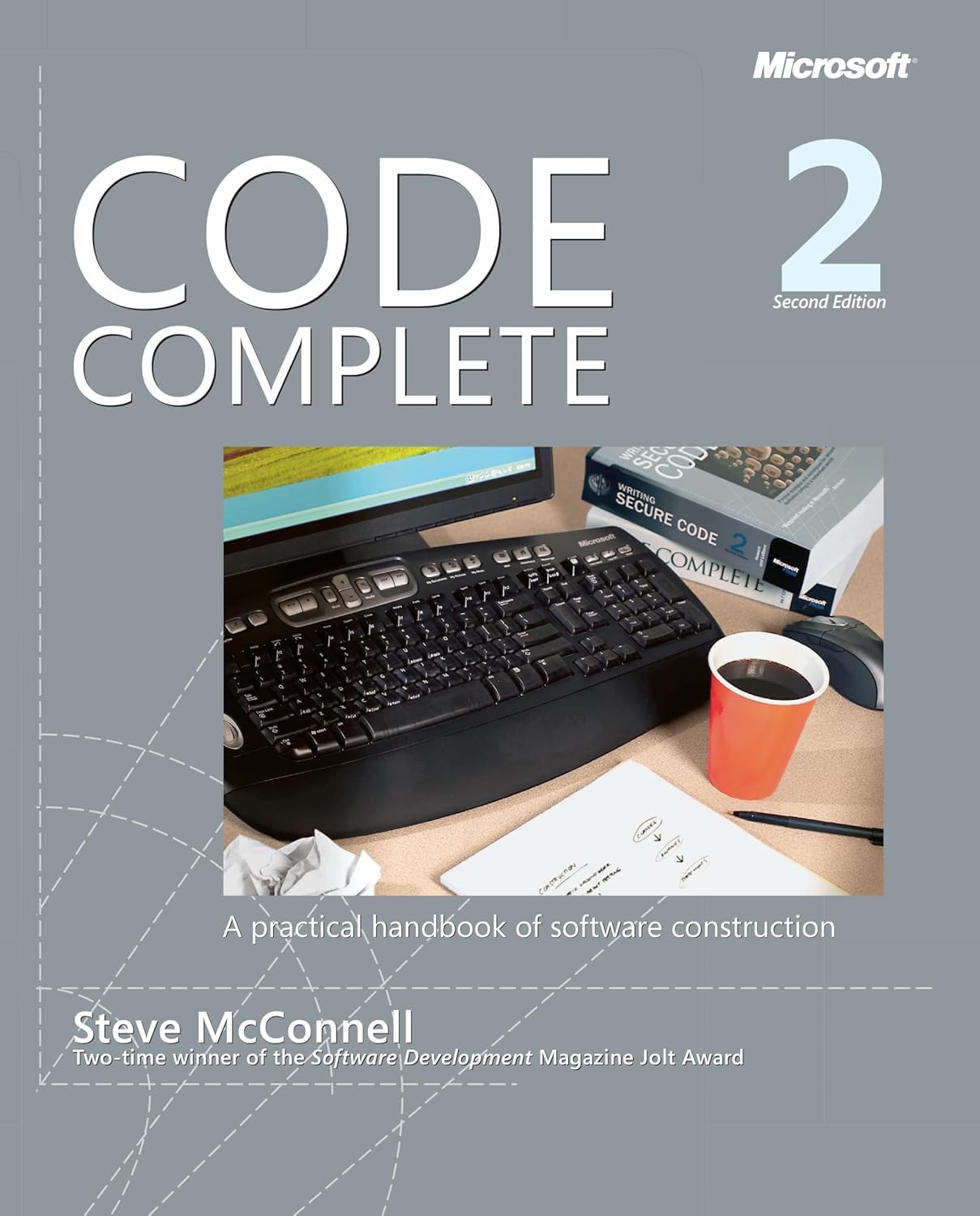
In the process of software development, writing code that merely runs correctly is a necessary condition, but it has never been a sufficient one. The true value of a software product lies in the quality of its source code: its clarity, maintainability, stability, and ability to adapt to the inevitable changes that occur over time. It is within this context that Code Complete: A Practical Handbook of Software Construction was created and established its enduring reputation.
Authored by Steve McConnell, Code Complete does not aim to teach a specific programming language or technology. Instead, the book focuses on the essence of software construction—the critical phase in which even the smallest technical decisions made during coding accumulate and ultimately shape the quality of the entire system.
The second edition of the book is the result of many years of research and the distillation of practical experience from large-scale software projects. Its content is presented in a systematic manner, clarifying core programming principles and proven practices that help readers understand not only how to write code, but more importantly, why it should be written that way.
With its practical approach, technology-neutral perspective, and emphasis on long-term thinking, Code Complete, 2nd Edition is regarded as a foundational reference for programmers at various levels, as well as for software development teams seeking to sustainably improve the quality of their source code.
1. Basic Information about the Book
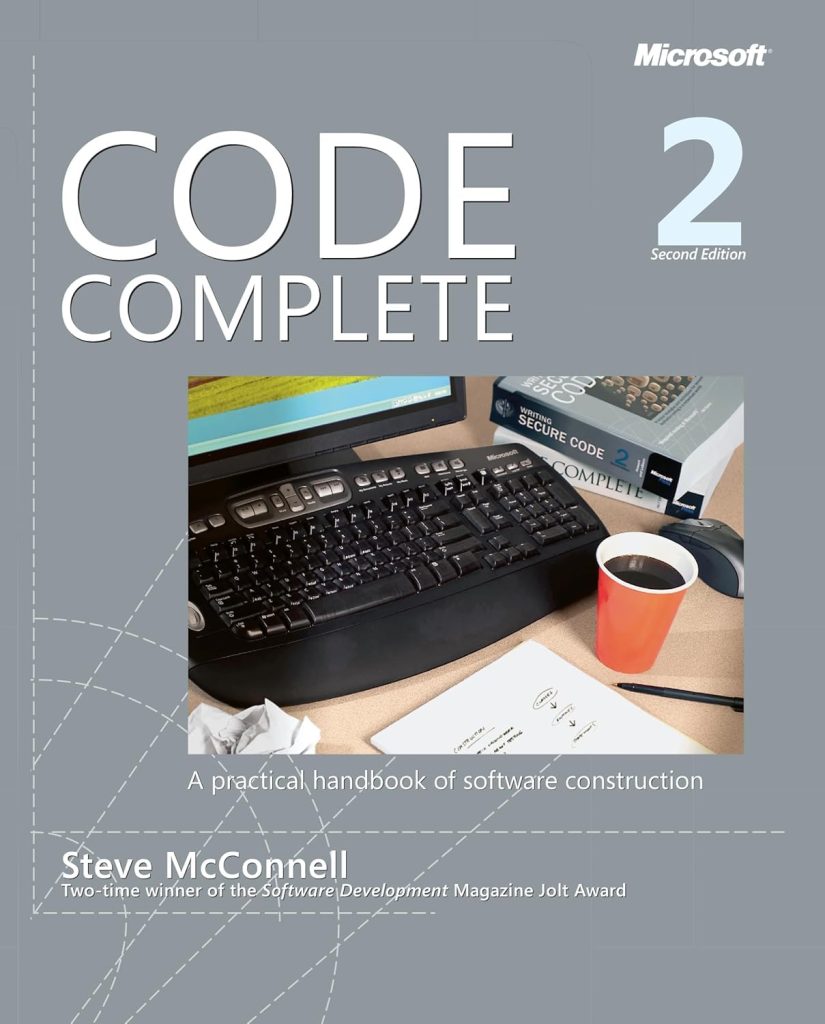
Code Complete, 2nd Edition is the most updated and refined version of one of the classic works in software engineering, with a strong focus on the discipline of software construction. The book was written by Steve McConnell, one of the most influential authors in the professional software development community.
- Book title: Code Complete, 2nd Edition
- Author: Steve McConnell
- Field: Software Engineering, Software Construction
- Publisher: Microsoft Press
- Year of publication: 2004 (second edition)
- Number of pages: Approximately 960 pages
- Language: English
Unlike many programming books that are tightly coupled to a specific technology or language, Code Complete is technically neutral, allowing readers to apply the principles and practices presented in the book to nearly any programming language and software development environment.
The second edition was significantly expanded compared to the first, adding numerous examples, studies, and deeper analyses of common issues encountered during the development and maintenance of source code. As a result, the book serves not only as a learning resource but is also regarded as a long-term reference for programmers and software development teams throughout their careers.
2. Content Overview
Code Complete, 2nd Edition provides a comprehensive view of the software construction process, focusing on the factors that directly influence source code quality in real-world practice. Rather than adopting an academic or purely theoretical approach, the book is organized as a structured body of principles, techniques, and lessons distilled from thousands of software projects.
Throughout the book, the author emphasizes that writing high-quality code is the result of sound thinking, thoughtful design, and consistent technical decisions across the entire development process. Readers are guided from foundational concepts—such as the role of software construction within the development lifecycle—to concrete coding techniques aimed at controlling complexity and reducing defects.
The book covers many core aspects of programming work, including:
- Approaches and preparation before writing code
- Design principles at the module and component levels
- Techniques for writing source code that is clear, understandable, and easy to maintain
- Managing complexity and minimizing technical risk
- Testing, debugging, and ensuring source code quality
- Coding style, documentation, and teamwork
One of the standout strengths of Code Complete, 2nd Edition lies in the way the author connects individual coding techniques into a coherent, holistic view of software quality. Each topic does not exist in isolation; instead, they complement one another toward a shared objective: building software systems that are stable, sustainable, and capable of long-term evolution.
Thanks to its broad scope combined with a well-structured presentation, the book serves both as a learning resource and as a reference that readers can return to for consultation throughout their professional work and career development.
3. Why Should You Read This Book?
In a rapidly evolving technological landscape, many programming resources quickly become outdated as new languages, frameworks, or tools emerge. Code Complete: A Practical Handbook of Software Construction offers a distinct value proposition: it focuses on the fundamental principles of software construction—principles that remain largely unchanged over time.
First and foremost, Code Complete helps readers develop a clear understanding of what high-quality code truly is. Rather than merely presenting prescriptive rules, the author explains why one way of writing code is superior to another and highlights the long-term consequences of seemingly minor technical decisions. This approach enables programmers to make well-reasoned choices instead of relying on habit or intuition.
Second, the book helps reduce defects and lower the cost of software maintenance. Many serious project issues do not stem from complex technology, but from hard-to-understand code, unclear structure, and a lack of discipline during development. The principles and techniques presented in Code Complete help mitigate these risks starting from the coding phase itself.
In addition, Code Complete, 2nd Edition is especially valuable for improving teamwork. Its discussions on coding conventions, code reviews, documentation, and quality standards help build a consistent, shareable, and easily extensible codebase—key factors for long-term projects and large development teams.
Another important reason to read this book is its flexibility and broad applicability across languages and platforms. Whether you are working on web, mobile, desktop, or enterprise systems, the principles in Code Complete remain relevant, helping you improve the quality of your work without being tied to any specific technology.
Finally, Code Complete does not merely help you write better code in the present; it also contributes to shaping a professional and sustainable programming mindset. This is a book you can revisit multiple times at different stages of your career, with each rereading offering new insights that align with your growing experience and evolving responsibilities.
4. Who Is This Book For?
Code Complete, 2nd Edition is written for a fairly broad audience without being superficial. The book is especially well suited for those who are serious about improving source code quality and developing a professional programming mindset, regardless of the language or technology they use.
First, the book is highly suitable for new programmers and those at a beginner to intermediate level. For this audience, Code Complete serves as a guide for developing the right coding mindset, helping establish good coding habits from the start and avoiding common mistakes that lead to hard-to-read and hard-to-maintain code later on.
For experienced programmers, the book helps organize the fragmented knowledge accumulated through work experience. Many principles that readers may have applied based on personal experience are clearly explained in terms of rationale and impact, enabling more informed and consistent technical decision-making.
Code Complete, 2nd Edition is also particularly valuable for senior developers, technical leads, and software architects. Its coverage of design, complexity management, coding standards, and code reviews directly supports the construction and maintenance of high-quality codebases in team environments and long-term projects.
Additionally, the book is suitable for computer science students and those preparing to enter a professional software development environment. Early exposure to well-established software construction principles helps significantly bridge the gap between academic knowledge and real-world industry requirements.
In summary, Code Complete is not intended for those who simply want to quickly learn a specific technology or framework. The book is best suited for individuals seeking to build a solid programming foundation, develop long-term thinking, and sustainably improve software quality.
5. Download and Experience
You can easily download or read this book online across various platforms such as SlideShare, Scribd, Issuu, or Studylib. Each platform supports direct reading, saving for later, and downloading when needed, making it convenient for both computers and mobile devices. Choose the platform that best fits your usage habits to fully experience the book’s content.
- Studylid: https://studylib.net/doc/27956323
- Slideshare (Part 1): https://www.slideshare.net/slideshow/practical-statistics-for-data-scientists-50-essential-concepts-using-r-and-python-part-1/284083302
- Slideshare (Part 2): https://www.slideshare.net/slideshow/practical-statistics-for-data-scientists-50-essential-concepts-using-r-and-python-part-2/284083341
6. References
[1] S. McConnell, Code Complete: A Practical Handbook of Software Construction, 2nd ed. Redmond, WA, USA: Microsoft Press, 2004, pp. 1–960, ISBN: 978-0-7356-1967-8.
[2] S. McConnell, “Code Complete, Second Edition,” Microsoft Press, 2004. [Online]. Available: https://www.microsoftpressstore.com/. Accessed: 2025.
[3] R. C. Martin, Clean Code: A Handbook of Agile Software Craftsmanship. Upper Saddle River, NJ, USA: Prentice Hall, 2008.
[4] OpenDev, Foundations of Information Systems. Available: https://kienthucmo.com/en/foundations-of-information-systems/
[5] OpenDev, Introduction to Computer Science. Available: https://kienthucmo.com/en/introduction-to-computer-science/
[6] OpenDev, Principles of Data Science. Available: https://kienthucmo.com/en/principles-of-data-science/