In the modern software development landscape, where technologies, frameworks, and programming languages evolve continuously, there is one element that remains fundamental yet is often overlooked: source code quality. Many projects begin with rapid development and rich feature sets, but after a short period, they become difficult to maintain, hard to extend, and increasingly risky to modify. The root cause does not lie in the chosen technologies, but in how developers write and structure the code from the very beginning.
In practice, most of a developer’s time is not spent writing new code, but reading, understanding, modifying, and extending existing code—sometimes written by others, and sometimes by their own past selves months earlier. When the codebase lacks clarity, uses vague naming, and is poorly structured, even small changes can lead to unpredictable consequences. As a result, maintenance costs rise, development velocity slows, and overall software quality deteriorates.
It is precisely in this context that the concept of “clean code” is no longer merely an aesthetic preference, but a mission-critical requirement for serious software projects. Writing clean code not only ensures that programs function correctly, but also enables development teams to communicate more effectively through the code itself, minimize defects, and sustain long-term, scalable growth.
From this practical need, numerous principles, standards, and coding philosophies have been distilled, systematized, and passed down over time. Among them are ideas that have become foundational to modern professional programming, exerting a profound influence on generations of software engineers—most notably the perspectives on “clean code” articulated with clarity, pragmatism, and long-term vision in Clean Code: A Handbook of Agile Software Craftsmanship by Robert C. Martin.
1. Basic Information about the Book
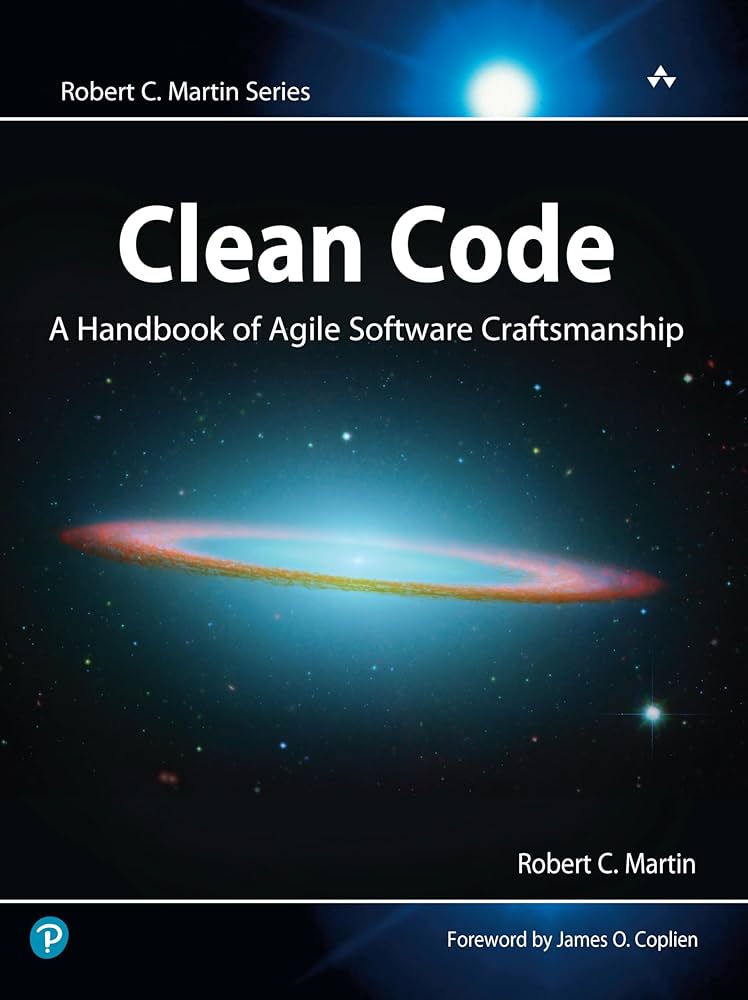
Clean Code: A Handbook of Agile Software Craftsmanship is a classic work in the field of software engineering, focused on improving source code quality through professional programming principles, rules, and mindset. The book was written by Robert C. Martin, one of the most influential figures in the modern software development community, particularly known for his contributions to the Agile movement and Clean Architecture.
The book was published by Prentice Hall, a highly respected publisher specializing in academic and technical literature, and it quickly became a standard reference for developers, software architects, and development teams worldwide. Since its release, Clean Code: A Handbook of Agile Software Craftsmanship has been continuously reprinted and widely adopted in both academic settings and enterprise environments.
In terms of content, Clean Code: A Handbook of Agile Software Craftsmanship does not aim to teach a specific programming language or technology. Instead, it focuses on universal principles of writing code: naming conventions, function organization, class design, error handling, test writing, and code refactoring. The illustrative examples in the book are primarily written in Java; however, the underlying ideas and principles are broadly applicable to most modern programming languages, including Python, C#, JavaScript, and Go.
An important point to emphasize is that Clean Code: A Handbook of Agile Software Craftsmanship is not intended for complete beginners. The book assumes that readers already possess basic programming knowledge and have participated in building or maintaining software systems. As a result, its content is highly practical, addressing real-world issues that developers frequently encounter in actual projects.
An important point to emphasize is that Clean Code: A Handbook of Agile Software Craftsmanship is not intended for complete beginners. The book assumes that readers already possess basic programming knowledge and have participated in building or maintaining software systems. As a result, its content is highly practical, addressing real-world issues that developers frequently encounter in actual projects.
Overall, Clean Code: A Handbook of Agile Software Craftsmanship is regarded as a foundational work that remains relevant over time, precisely because it does not depend on short-lived technology trends but instead focuses on the core values of the programming profession. This is also why the book consistently appears on “must-read” lists for developers across a wide range of experience levels.
2. Content Overview
Clean Code: A Handbook of Agile Software Craftsmanship is not structured as a purely theoretical text; instead, it is organized to progress from foundational principles to in-depth practice, closely mirroring the way a programmer matures over the course of their career. The book’s structure can be broadly divided into three major parts: definitions and principles, detailed practices, and the analysis and improvement of real-world code.
2.1. Opening Section – Defining the Concept and Mindset of “Clean Code”
The opening chapters lay the foundation for the entire book by addressing a seemingly simple yet frequently misunderstood question: what exactly is clean code?
Rather than offering a rigid definition, Robert C. Martin synthesizes perspectives from multiple software experts to identify the shared characteristics of high-quality code—clarity, coherence, clear intent, and the absence of unnecessary elements.
A key emphasis in this section is the professional responsibility of developers. Writing clean code is not merely a personal choice, but an obligation to:
- teammates who will read and maintain the code
- the organization that invests in the product
- the developer’s own future self
The opening section helps shift the reader’s perspective from “writing just to get it done” to “writing for long-term sustainability.”
2.2. Core Section – Rules and Principles of Writing Clean Code**
This is the core section and the largest part of the book. Each chapter focuses on a specific aspect of the codebase, progressing from the smallest elements to larger structural concerns.
Naming The author devotes significant attention to the practice of naming variables, functions, and classes, as it has the most direct impact on code readability. A good name allows the reader to understand the intent without additional explanation, whereas a poor name can render an entire block of code ambiguous and difficult to comprehend.
Functions Principles such as “functions should do one thing,” “functions should be small,” and “avoid complex nesting” are presented not merely as theory, but through side-by-side comparisons of good and bad code. Through these examples, readers gain a clear understanding of why long, multi-responsibility functions are a major source of maintenance problems.
Comments and Code Formatting Rather than encouraging extensive use of comments, the author argues that comments should be a last resort when the code cannot adequately explain itself. In addition, code formatting—such as the use of whitespace, line breaks, and the organization of code blocks—is treated as a form of visual communication among developers.
Objects, Data Structures, and Classes These chapters raise the level of abstraction, focusing on how code is organized at the design level. Concepts such as single responsibility, cohesion, and extensibility are analyzed through concrete examples, helping readers clearly understand the long-term impact of poor design decisions made early on.
2.3. Advanced Section – Error Handling, Boundaries, and Testing
At this stage, the book shifts its focus to issues that typically emerge only when a system has grown sufficiently large:
- How to handle errors without cluttering or obscuring the main control flow
- How to integrate external libraries without making the system excessively dependent on them
- The role of unit tests in safeguarding source code quality
Robert C. Martin regards testing as an inseparable part of clean code. Tests do not merely help uncover defects; they also reflect the quality of a system’s design. Code that is difficult to test is often a clear indication of poor design.
2.4. Final Section – Case Studies and Real-World Refactoring
The final section of the book is where the principles are put into real-world practice. The author presents low-quality code samples and then refactors them step by step, providing detailed explanations for the rationale behind each change. This section helps readers:
- understand how to apply principles in real-world situations
- recognize common “code smells”
- develop a mindset of continuous improvement rather than rewriting from scratch
This section is particularly valuable for experienced developers, as it closely reflects the kinds of problems commonly encountered in real-world projects.
3. Who is This Book For?
Although Clean Code: A Handbook of Agile Software Craftsmanship is not designed as an introductory textbook, it has a remarkably broad influence and is relevant to a wide range of audiences within the software development field. The book’s value lies not in teaching syntax or new technologies, but in helping readers elevate their professional standards in how they write and organize source code.
Junior Developers For developers at the early stages of their careers, Clean Code: A Handbook of Agile Software Craftsmanship serves as a guiding framework for professional thinking. The book helps readers understand that writing code is not merely about making programs work, but about making code readable, maintainable, and extensible. Early exposure to principles such as proper naming, function decomposition, and class organization helps junior developers avoid forming bad habits that are difficult to correct later in their careers.
Mid-level / Senior Developers For developers who have participated in multiple projects, Clean Code: A Handbook of Agile Software Craftsmanship often feels “familiar yet profound.” Many of the issues discussed in the book—such as codebases growing unwieldy over time, functions becoming increasingly long, and classes taking on too many responsibilities—mirror real challenges they have faced. The book helps systematize these scattered experiences into clear principles, thereby enhancing their ability to assess and improve code quality.
Team Leads and Software Architects For those in technical leadership roles, Clean Code: A Handbook of Agile Software Craftsmanship provides a common language for discussing code quality within the team. The principles outlined in the book can serve as standards for code reviews, guide refactoring efforts, and help establish consistent coding conventions. More importantly, the book enables team leads to instill the mindset of writing clean code in team members, rather than merely fixing superficial errors.
IT Students IT students are often trained extensively in algorithms and data structures but have limited exposure to software maintenance and long-term development practices. Clean Code: A Handbook of Agile Software Craftsmanship helps bridge this gap by introducing practical industry standards, thereby better preparing students for professional working environments after graduation.
Anyone Working with Code Over Time The book is not only suitable for pure developers but also for professionals who frequently read and modify code, such as QA automation engineers, DevOps engineers, or technical consultants. Understanding and applying clean code principles helps them work more effectively with systems, reduces risks when making changes, and enhances overall software stability.
4. Why You Should Read This Book
Clean Code: A Handbook of Agile Software Craftsmanship does not introduce a new technology or syntax, but it offers something far more valuable: professional standards in programming. This book helps you shift from “writing code just to make it work” to “writing code that lasts and evolves sustainably.”
First, Clean Code helps significantly reduce software maintenance costs. Principles such as proper naming, function decomposition, class design, and error handling make the codebase clearer, more understandable, and less risky to modify. In practice, these factors are decisive for the long-term efficiency and success of a project.
Second, the book enhances your ability to work effectively in teams. Clean code serves as a form of communication: when the codebase is clear and consistent, reviewing, handing over, and extending the system becomes easier, reducing technical conflicts and individual dependencies.
Third, Clean Code helps you develop a professional programming mindset. Rather than offering disconnected tips, the book shapes the way you think about a developer’s responsibilities, product quality, and the impact of each line of code on the overall system.
Finally, the value of Clean Code is timeless. The principles in the book can be applied across most programming languages and development environments, from small projects to large systems, and from individual contributors to entire teams.
5. Download and Experience
You can easily download or read this book online across various platforms such as SlideShare, Scribd, Issuu, or Studylid. Each platform supports direct reading, saving for later, and downloading when needed, making it convenient for both computers and mobile devices. Choose the platform that best fits your usage habits to fully experience the book’s content.
- Studylid: https://studylib.net/doc/27956323
- Slideshare (Part 1): https://www.slideshare.net/slideshow/practical-statistics-for-data-scientists-50-essential-concepts-using-r-and-python-part-1/284083302
- Slideshare (Part 2): https://www.slideshare.net/slideshow/practical-statistics-for-data-scientists-50-essential-concepts-using-r-and-python-part-2/284083341
6. References
[1] R. C. Martin, Clean Code: A Handbook of Agile Software Craftsmanship. Upper Saddle River, NJ, USA: Prentice Hall, 2008.
[2] R. C. Martin, The Clean Coder: A Code of Conduct for Professional Programmers. Upper Saddle River, NJ, USA: Prentice Hall, 2011.
[3] R. C. Martin, Clean Architecture: A Craftsman’s Guide to Software Structure and Design. Boston, MA, USA: Pearson Education, 2017.
[4] A. Hunt and D. Thomas, The Pragmatic Programmer: Your Journey to Mastery, 20th Anniversary ed. Boston, MA, USA: Addison-Wesley Professional, 2019.
[5] I. Sommerville, Software Engineering, 10th ed. Boston, MA, USA: Pearson Education, 2016.
[6] OpenDev, Foundations of Information Systems. Available: https://kienthucmo.com/en/foundations-of-information-systems/
[7] OpenDev, Introduction to Computer Science. Available: https://kienthucmo.com/en/introduction-to-computer-science/
[8] OpenDev, Principles of Data Science. Available: https://kienthucmo.com/en/principles-of-data-science/