Recently, you and I have likely seen news about data breaches, compromised accounts, or phishing emails attempting to trick users into verifying their accounts. These incidents not only cause inconvenience for individuals but can also lead to financial losses, reputational damage, and even serious violations of privacy. In the digital era, data is not merely information – it is a form of asset, the “digital gold” of both individuals and organizations. As nearly all activities, from work and study to transactions, take place online, ensuring information security and data protection has become a critical necessity.
In this article, you and I will explore information security and data protection to gain a comprehensive and easy-to-understand overview of security in cyberspace – from basic concepts and common threats, to foundational principles, widely used security techniques, the role of people, and notable emerging trends. Let’s get started.
1. Concept and Importance of Information Security
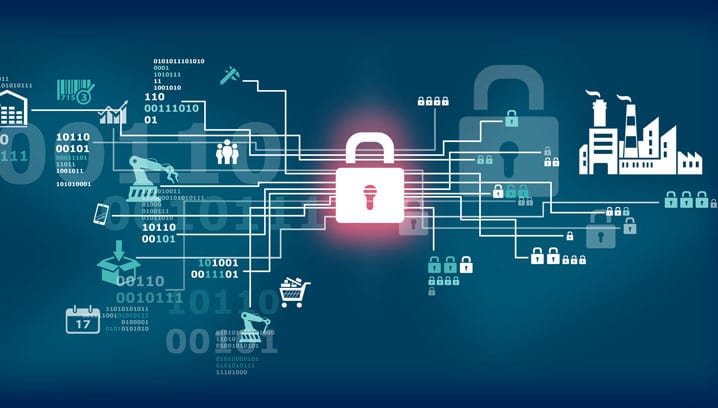
Information security (Information Security) is a set of measures, processes, and techniques aimed at ensuring that data and information systems are protected from unauthorized access, modification, or destruction. Its objectives revolve around three core elements, commonly known as the CIA triad:
- Confidentiality: ensuring that only authorized individuals can access data.
- Integrity: ensuring that data is not altered, deleted, or manipulated without authorization.
- Availability: ensuring that information and systems are operational and accessible when needed.
Meanwhile, cybersecurity focuses on protecting networks, servers, applications, and devices from external threats (such as hackers, malware, or DDoS attacks). Simply put, information security is the overarching “umbrella,” while cybersecurity is the technical “shield” within it.
The importance of information security today is undeniable. As data has become a valuable asset, any data breach or intrusion can lead to serious consequences:
- Financial losses: hackers may steal bank accounts or encrypt data to demand ransom (ransomware).
- Loss of reputation and trust: organizations that expose customer data often take a long time to restore their credibility.
- Legal risks: many countries enforce strict regulations on personal data protection (such as GDPR in Europe), and violations can result in substantial fines.
To mitigate these risks, many organizations implement an Information Security Management System (ISMS) in accordance with ISO/IEC 27001 – an internationally recognized standard that provides guidance on establishing, operating, monitoring, and continuously improving information security controls across the entire organization.
2. Common Types of Threats in Cyberspace
Cyberspace is an environment full of opportunities but also fraught with numerous risks. To protect ourselves and our organizations, we need to clearly understand the common types of threats below – these “silent enemies” can attack anyone, at any time.
2.1 Malware
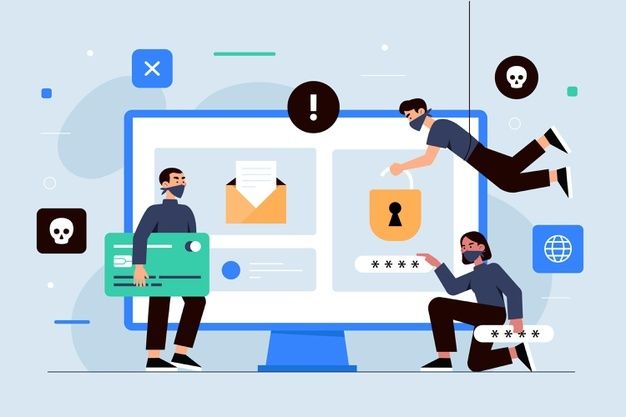
Malware is a general term for software designed with malicious intent, such as viruses, worms, trojans, and ransomware. It can infiltrate systems through email attachments, pirated software, or malicious links. Among these, ransomware is particularly dangerous because it encrypts all data and demands a ransom from the victim in exchange for recovery. Attacks of this type are increasing rapidly, causing billions of dollars in losses each year for both individuals and organizations.
(Source: Verizon Data Breach Investigations Report)
2.2 Phishing
Phishing is a form of online fraud in which attackers impersonate legitimate emails, websites, or messages to steal sensitive information such as passwords, OTP codes, or banking card details. Modern phishing campaigns are increasingly sophisticated, often enhanced by AI, making it difficult for users to distinguish between real and fake. According to Kaspersky, hundreds of millions of phishing attacks are detected and blocked every year, highlighting the widespread and dangerous nature of this threat.
2.3 Social Engineering
This type of attack does not rely on advanced technical skills but instead exploits psychological factors such as trust, urgency, or fear to trick victims into voluntarily disclosing information or granting access to attackers. Examples include a fake email impersonating a manager requesting an urgent money transfer, or a phone call posing as technical support asking to “verify an account.” For this reason, humans are often considered the weakest link in the security chain.
2.4 DDoS (Distributed Denial of Service Attacks)
DDoS attacks aim to cripple a system by overwhelming it with a massive volume of access requests that exceed the server’s processing capacity. As a result, websites or online services become unavailable or severely disrupted, causing financial losses for businesses and damaging their reputation in the eyes of customers.
2.5 Risks from IoT Devices and Social Media
In an era where “everything is connected,” IoT devices such as cameras, routers, or smart speakers can become security vulnerabilities if they are not properly updated or secured. In addition, oversharing personal information on social media makes it easier for attackers to collect data and carry out targeted attacks.
In summary, cyber threats are becoming increasingly sophisticated and diverse. Understanding their nature is the first step for individuals and organizations to prevent risks, respond effectively, and build a safer digital environment.
3. Fundamental Principles of Information Security
When it comes to information security, all protective measures – no matter how complex – are built upon a set of fundamental principles. Understanding and adhering to these principles helps us design and maintain systems that are secure, stable, and trustworthy.
3.1 The CIA Triad (Confidentiality – Integrity – Availability)
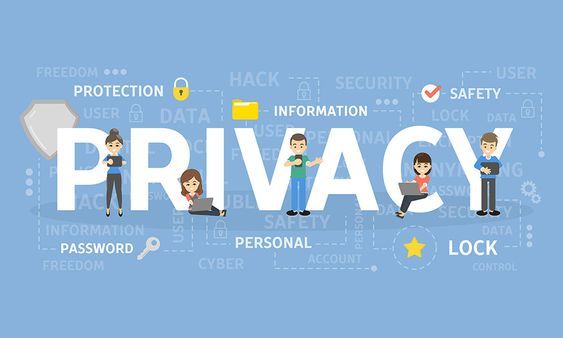
These are the three core pillars of information security:
- Confidentiality: Data should only be accessed by authorized individuals. For example, your bank account information should only be visible to you and the bank.
- Integrity: Ensures that data is not altered, deleted, or manipulated without authorization during storage or transmission. A file that is silently modified by an attacker can lead to serious consequences, especially in financial or healthcare systems.
- Availability: Systems and data must remain accessible when users need them. A system rendered unreachable due to a DDoS attack is considered a violation of this principle.
3.2 Principle of Least Privilege
Users, applications, and processes should be granted only the minimum level of access required to perform their tasks—no more. This approach limits potential damage if an account is compromised. For instance, accounting staff do not need access to technical system databases, and vice versa.
3.3 Multi-Factor Authentication (MFA)
Passwords alone are no longer sufficient. MFA adds additional layers of security, such as one-time passwords (OTP), authenticator apps, or physical security keys. Even if a password is exposed, attackers cannot gain access without the remaining authentication factors.
3.4 Regular Updates and Patch Management
Most cyberattacks exploit unpatched software vulnerabilities. Therefore, regularly updating operating systems, browsers, security software, and IoT devices is a basic yet critical practice. A small patch can sometimes prevent a major security incident.
In summary, these principles form the foundational framework of information security. When applied consistently, they help reduce risk, strengthen system resilience, and create a safer digital environment for both individuals and organizations.
4. Common Security Techniques and Technologies
To protect data and systems from increasingly sophisticated threats, security techniques and technologies play a foundational role in all digital environments. Below are the common and essential technologies that you and I should clearly understand.
4.1 Encryption
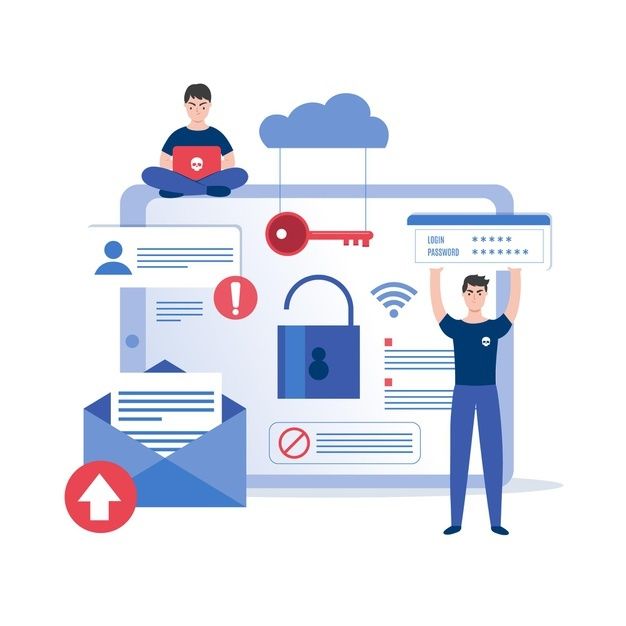
Encryption is a technique that converts original data (plaintext) into an unreadable form (ciphertext), helping to protect the confidentiality of information during storage (data-at-rest) or transmission (data-in-transit).
There are two main types of encryption:
- Symmetric Encryption: Uses the same key for both encryption and decryption. It is fast and efficient but requires careful key management.
- Asymmetric Encryption: Uses a pair of public and private keys and is commonly applied in secure communications such as SSL/TLS.
4.2 SSL/TLS – Secure Communication Protocols on the Web
The SSL/TLS (Secure Sockets Layer / Transport Layer Security) protocols form the foundation of HTTPS, enabling the encryption of data exchanged between browsers and servers, thereby preventing eavesdropping attacks or packet tampering.
A secure website should have:
- A valid digital certificate (SSL certificate),
- Strong TLS configuration (e.g., disabling weak ciphers, enabling Perfect Forward Secrecy),
- Regular renewal and periodic validation of certificates.
4.3 Firewalls, IDS/IPS, and Endpoint Protection
- Firewall: Filters and controls network traffic based on predefined policies, preventing unauthorized access.
- IDS (Intrusion Detection System): Detects abnormal activities or signs of cyberattacks.
- IPS (Intrusion Prevention System): Not only detects but also actively blocks attacks in real time.
- Endpoint Protection (Antivirus/EDR): Protects endpoint devices from malware by analyzing behavior and isolating threats.
These tools work together to form a defense-in-depth architecture – a highly effective security strategy in enterprise environments.iều tầng (defense in depth) – một chiến lược bảo mật hiệu quả trong môi trường doanh nghiệp.
4.4 Patch Management & Backup
A secure system must be continuously maintained and regularly updated. Patches help remediate security vulnerabilities discovered in software. In addition, regular data backups and restoration testing enable organizations or individuals to minimize damage when incidents such as ransomware attacks or system failures occur.
Overall, these techniques and technologies act as a “shield” that protects information from constantly evolving threats. More importantly, they are only truly effective when implemented in conjunction with well-defined processes and strong security awareness among people.
5. User Behavior and the Human Factor in Security
When discussing information security, it becomes evident that technical measures are only part of the solution – the human factor remains the weakest link in the security chain. According to numerous studies, more than 80% of security breaches originate from user errors or careless behavior, such as clicking on suspicious links, downloading files from untrusted sources, or reusing the same password across multiple accounts.

No matter how robust a system may be, a single small mistake can open the door to attackers. Therefore, the human factor must be placed at the center of every security strategy.
5.1 Safe Habits Users Should Develop
- Do not click on suspicious links or attachments: Attackers often use phishing emails or enticing messages to trick users into visiting malicious websites.
- Use strong and unique passwords: Passwords should be long and include special characters, numbers, and uppercase letters. Using a password manager is recommended to avoid forgetting passwords and reusing them across multiple accounts.
- Enable multi-factor authentication (MFA): This is a critical layer of protection that helps prevent unauthorized access even if a password is compromised.
- Avoid oversharing personal information on social media: Information such as birth dates, schools, or pet names – though seemingly harmless – can be exploited to guess passwords or facilitate identity impersonation.
5.2 Education and Awareness in Information Security
An effective training program can help users recognize threats and respond appropriately. Organizations should regularly conduct:
- Security awareness training programs,
- Phishing attack simulations to assess employee responses,
- Clear and easy-to-understand security policy updates.
Individuals can also engage in self-learning through free online courses or specialized blogs to better understand emerging threats.
In summary, technology can reduce risk, but people remain the decisive factor. When every user is aware and takes appropriate action, overall security is significantly strengthened.
6. Current Trends in Information Security
Several prominent trends are currently having a strong impact on how organizations and individuals develop their information security strategies. In the context of rapid technological change and increasingly sophisticated threats, staying updated and adapting to these trends has become essential. Understanding the right direction enables organizations to proactively mitigate risks and maintain sustainable data protection capabilities.
- Zero Trust (No Implicit Trust)
The Zero Trust model does not assume that the internal network is inherently “secure,” but instead requires continuous authentication and security evaluation for every access request. This approach is recommended by NIST in its publication SP 800-207. - Cloud Security
As many organizations migrate to the cloud, the shared responsibility model and proper security configuration become top priorities. - AI/ML in Security and Attacks
AI is increasingly used to detect attack patterns more quickly; however, there is also the risk that malicious actors may leverage AI to generate phishing emails or voice deepfakes, making social engineering attacks more convincing – a concern that has been warned about by security agencies in many countries. - Ransomware and RaaS (Ransomware-as-a-Service)
Ransomware continues to evolve under a service-based model, making attacks more accessible to a wider range of criminal groups. Recent reports indicate that ransomware remains a major threat across multiple industries. - Standards and Risk Governance
Standards such as ISO/IEC 27001 help organizations establish an information security management system in a structured and risk-based manner.
7. Conclusion
Information security is not solely a matter of technology, but a combination of people, processes, and awareness. In the digital era, where data has become a valuable asset, understanding security principles, user behavior, and emerging trends such as Zero Trust and AI in cybersecurity is critical to survival. Security can never be “absolute,” but through proactive learning, adherence to standards, and appropriate investment, risks can be minimized and a safer, more trustworthy digital environment can be created for everyone.
8. References
[1] National Institute of Standards and Technology (NIST), Zero Trust Architecture (SP 800-207), 2020. [Online]. Available: https://csrc.nist.gov/publications/detail/sp/800-207/final
[2] ISO/IEC, Information Security Management Systems — Requirements (ISO/IEC 27001), 2022. [Online]. Available: https://www.iso.org/isoiec-27001-information-security.html
[3] The Guardian, “AI voice scams and deepfakes raise cybersecurity concerns,” 2024. [Online]. Available: https://www.theguardian.com/
[4] Securelist, Ransomware trends and analysis report, 2024. [Online]. Available: https://securelist.com
[5] Microsoft Security Blog, “Shared Responsibility in Cloud Security,” 2023. [Online]. Available: https://www.microsoft.com/security/blog/