On the journey to becoming a professional programmer, beyond technical knowledge, independent thinking and a hands-on, practical mindset are two critical factors that determine an individual’s long-term resilience and success. The Pragmatic Programmer by Andrew Hunt and David Thomas is not merely a book about programming techniques; it is a compass that helps readers learn how to think like a “real” programmer. The book has had a profound impact on the software development community thanks to its blend of theory and real-world experience, guiding readers to establish the right mindset from the very beginning.
1. Basic Information about the Book
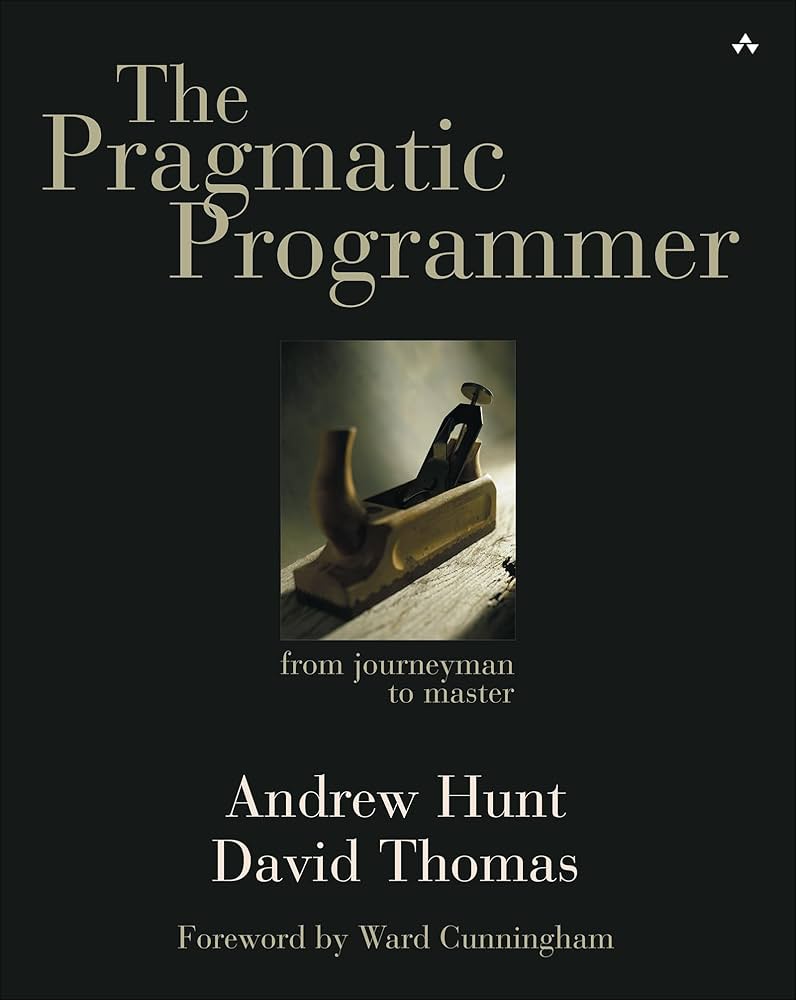
The Pragmatic Programmer: From Journeyman to Master is widely regarded as one of the most classic and influential books in the field of software development. Originally published in 1999, it was later revised and reissued in 2019 as the 20th Anniversary Edition to reflect a more modern technological landscape, while still preserving its core philosophy and spirit.
Publication Information
- English Title: The Pragmatic Programmer: From Journeyman to Master
- Authors: Andrew Hunt and David Thomas
- First Publication Year: 1999
- Revised Edition: 2019 (20th Anniversary Edition)
- Publisher: Addison-Wesley Professional
- Formats: Print book and e-book
Background and Context of Publication
The book was published at a time when the software industry was experiencing rapid growth and the demand for high-quality software was becoming increasingly urgent. The authors did not write solely for novice programmers; rather, they also addressed experienced practitioners who were grappling with challenges related to design, creative thinking, effective communication, and professional responsibility.
The most distinctive strengths of The Pragmatic Programmer lie in its flexibility, its emphasis on practical thinking, and its advocacy of proactive, continuous learning. Rather than being a dry academic text, the book is a collection of advice, lessons, and philosophies that help shape the mindset of a professional programmer.
2. Content Overview
The Pragmatic Programmer does not delve deeply into specific syntax or frameworks. Instead, it focuses on general principles and techniques that help developers work more effectively across any software development environment. The book is organized into multiple chapters, each consisting of concise, easy-to-digest pieces of advice (“tips”).
Below is a summary of the main contents:
2.1. Proactive Thinking – Think Pragmatically
One of the book’s strongest messages is the importance of thinking proactively when developing software. This includes:
- Asking the right questions: Why choose this approach instead of another?
- Avoiding mechanical adherence to instructions: fully understanding the reasons and objectives before implementation.
- Proactively learning and improving: continuously evaluating and exploring new tools and processes.
A proactive mindset prevents you from becoming a mechanical code copier and instead enables you to build solutions that are genuinely appropriate to the given context.
2.2. Software Development Techniques
The authors introduce a variety of techniques, for example:
- DRY – Don’t Repeat Yourself: Each piece of knowledge should have a single, authoritative representation within a system. Duplication leads to errors, increased maintenance costs, and inconsistency.
- Orthogonality (Separation of Concerns): Modules should be independent and loosely coupled, minimizing mutual dependencies and allowing changes in one component without unintended effects on others.
- Tracer Bullets: A mindset of developing software through iterative cycles of experimentation, feedback, and refinement—similar to firing tracer rounds to validate direction and adjust toward the target.
- Refactoring: Continuously improving the internal structure of code to maintain clarity, cleanliness, and long-term maintainability without changing its external behavior.
These techniques form a solid foundation for writing “cleaner” code that is easier to maintain and more adaptable to change over time.
2.3. Tools and Working Environment
The book also discusses how to organize and optimize the working environment:
- Using a Version Control System: This is a fundamental yet critically important element in professional software development.
- Automating build and test processes: minimizing errors caused by manual operations and increasing consistency and reliability in the development workflow.
- Clear communication with teammates and clients: ensuring that all parties have a shared and accurate understanding of requirements.
The concept of being “pragmatic” applies not only to code, but also to the way you collaborate and work within a team.
2.4. Expanding Your Professional Mindset
In the following section, the book broadens its scope to aspects beyond pure technical skills:
- Lifelong learning: technology evolves rapidly, so skills must be continuously developed and updated.
- Professional responsibility: proactively managing and planning your own career roadmap.
- Understanding the business context: knowing why the software is being built and what needs it is intended to serve.
Through these sections, the book provides not only practical “tools” but also a way of thinking—an essential factor that distinguishes an average programmer from an outstanding one.
3. Why Should You Read This Book?
In a market flooded with hundreds—if not thousands—of programming books, you may naturally ask yourself: “Why is The Pragmatic Programmer worth reading?”
3.1. Building the Right Mindset – The Foundation of a Programming Career
Many technical books focus on specific technologies (Java, Python, React, etc.), whereas The Pragmatic Programmer emphasizes problem-solving mindset. This is the book’s greatest strength, because:
- Programming languages and tools may change, but sound design thinking and problem-solving skills remain timeless and enduring.
- You learn how to think independently, rather than relying solely on specific frameworks or documentation.
Reading this book helps you develop more systematic thinking and gain a deeper understanding of the fundamental nature of software.
3.2. Concise and Accessible – Yet Profound
Another strength of the book is its presentation in short, easily digestible sections, with each “tip” conveying a valuable lesson. You can read each part independently and still gain useful insights. Therefore, even if you are busy, you can read and apply each piece of guidance immediately.
3.3. Immediate Practical Application
Unlike purely theoretical academic books, The Pragmatic Programmer is filled with lessons that can be immediately applied to real-world projects:
- Reducing errors caused by code duplication.
- Creating an automated working environment.
- Adopting a test-driven mindset to support sustainable software development.
The lessons in the book help you improve both code quality and software development speed effectively.
3.4. Suitable for Every Stage of Your Career
Whether you are a recent graduate or an experienced developer, the book offers valuable insights:
- Beginners develop a strong foundational mindset.
- Experienced professionals can reevaluate their practices to optimize their workflows.
- Team leads can enhance team workflows and improve collaboration processes.
4. Who Is This Book For?
The Pragmatic Programmer is suitable for virtually anyone working—or planning to work—in the field of software development, regardless of experience level or specific role.
- Students and novice programmers: the book helps establish the right mindset from the start, avoid common bad habits, and build a solid foundation for a programming career.
- Experienced developers: this book serves as a guide to review and enhance coding practices, work organization, and problem-solving approaches more effectively.
- Technical team leads, software architects, and managers: the book offers a comprehensive perspective on code quality, workflow processes, and sustainable development thinking within a team.
- Those interested in a long-term software career: beyond technical skills, the book is well-suited for individuals seeking to cultivate a professional and proactive mindset in their tech careers.
The Pragmatic Programmer by Andrew Hunt and David Thomas is not merely a technical book; it serves as a guide to the mindset and professional behaviors essential in software development. From fundamental principles such as DRY to techniques like refactoring and automation, the book helps readers gradually build the right habits and ways of thinking to become outstanding programmers.
If you are looking for a foundational resource to develop a solid programming mindset, enhance your work skills, and prepare for long-term challenges in a software career, The Pragmatic Programmer is a book you should read at least once in your lifetime.
5. Download and Experience
You can easily download or read this book online on various platforms such as SlideShare, Scribd, Issuu, or Studylid. Each platform allows direct reading, saving for later, and downloading when needed, making it convenient for both computers and mobile devices. Choose the platform that best fits your usage habits to fully experience the book’s content.
- Studylid: https://studylib.net/doc/27956323
- Slideshare (Part 1): https://www.slideshare.net/slideshow/practical-statistics-for-data-scientists-50-essential-concepts-using-r-and-python-part-1/284083302
- Slideshare (Part 2): https://www.slideshare.net/slideshow/practical-statistics-for-data-scientists-50-essential-concepts-using-r-and-python-part-2/284083341
6. References
[1] A. Hunt and D. Thomas, The Pragmatic Programmer: From Journeyman to Master, 1st ed. Boston, MA, USA: Addison-Wesley Professional, 1999.
[2] A. Hunt and D. Thomas, The Pragmatic Programmer: Your Journey to Mastery, 20th Anniversary ed. Boston, MA, USA: Addison-Wesley Professional, 2019.
[3] S. McConnell, Code Complete: A Practical Handbook of Software Construction, 2nd ed. Redmond, WA, USA: Microsoft Press, 2004.
[4] R. C. Martin, Clean Code: A Handbook of Agile Software Craftsmanship, Upper Saddle River, NJ, USA: Prentice Hall, 2008.
[5] E. Gamma, R. Helm, R. Johnson, and J. Vlissides, Design Patterns: Elements of Reusable Object-Oriented Software, Boston, MA, USA: Addison-Wesley, 1994.
[6] Kiến Thức Mở, “Code Complete – A Practical Handbook of Software Construction,
[7] OpenDev, Foundations of Information Systems. Available: https://kienthucmo.com/en/foundations-of-information-systems/
[8] OpenDev, Introduction to Computer Science. Available: https://kienthucmo.com/en/introduction-to-computer-science/
[9] OpenDev, Principles of Data Science. Available: https://kienthucmo.com/en/principles-of-data-science/