
In software development, design is not merely about drawing diagrams or choosing technologies – it is the art of structuring systems so that source code is easy to understand, maintain, and adapt to change. Understanding software design principles helps avoid technical debt, reduce maintenance-related errors, and enable faster product development without unnecessary complexity.
In this article, you and I will explore the concept of software design, the foundational principles (especially SOLID), several supporting principles, practical application approaches, and common mistakes encountered in software design.
1. Concept and Role of Software Design
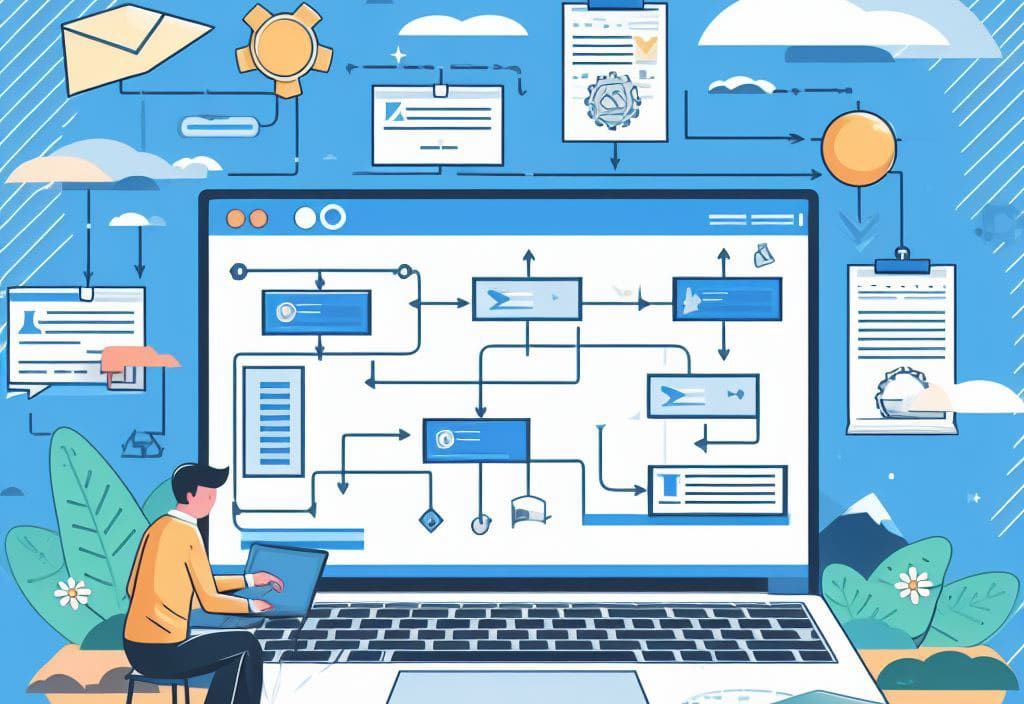
Software design is a critical phase in the software development life cycle, positioned between requirements analysis and coding. If the analysis phase answers the question “What should the software do?”, the design phase focuses on “How will the software be built?”. At this stage, functional and non – functional requirements are transformed into concrete technical models – such as class structures, modules, interfaces, data flows, and the relationships among system components.
Software design is not merely about drawing diagrams or splitting modules; it is the art of organizing logic and responsibilities so that the system operates efficiently while remaining easy to extend in the future. A well – crafted design provides a solid foundation for the development team to clearly understand the role of each component, avoid overlapping responsibilities, and ensure the product has a clear structure that is maintainable over the long term.
The main objectives of software design include:
- Creating an understandable code structure: Clean, well-organized code that is easy for others to read and continue working on.
- Ensuring reusability and extensibility: Components are designed flexibly so they can be modified or extended without impacting the overall system.
- Facilitating testing and maintenance: When each component has a well-defined responsibility, writing tests, fixing bugs, or upgrading features becomes significantly easier.
- Reducing risks when requirements change: By properly separating concerns, changes in one area have minimal impact on others, helping maintain system stability over time.

Distinguishing Between Software Architecture and Software Design:
These two concepts are often confused, but in practice they operate at different levels:
- Software architecture is like the master plan of a city – it defines the major areas, how they are connected, and the overarching operating principles. Examples include choosing system models such as microservices, monolithic, layered, or event-driven architectures.
- Software design is more detailed, comparable to designing individual buildings within that master plan – it determines how each class, interface, and module functions, how they communicate and share data, and how they conform to the overall architecture.
Role in Avoiding Technical Debt:
A good design enables the system to adapt to change without disrupting stable components. When new features are required, developers can extend the system without making deep modifications to the core. In contrast, poorly organized design – such as tightly coupled code or unclear boundaries – creates what is known as technical debt. Over time, adding or modifying functionality becomes increasingly difficult, as small changes can trigger cascading effects across the system. It is similar to building a house without clear blueprints: the more you try to fix it, the more chaotic and fragile it becomes.
In summary, software design acts as the bridge between conceptual ideas and concrete implementation, ensuring that architectural intentions are realized in a maintainable and sustainable way.
2. Fundamental Software Design Principles
Software design is not merely about arranging code so that it “works,” but about the art of structuring systems in a logical, flexible, and sustainable way over the long term. Regardless of whether a software system is small or large in scale, the following fundamental principles always serve as the foundation that guides effective software design.

2.1. Separation of Concerns
This is one of the most fundamental principles in software design. It encourages dividing a system into multiple parts, each responsible for a specific set of functions.
For example, in a web application, the user interface (UI), business logic, and data access (database layer) should be clearly separated.
This separation enables parallel development, independent testing, and easier maintenance, while also reducing the risk of errors propagating across components.
2.2. Abstraction
Abstraction helps hide complex implementation details and exposes only what is necessary for users or other components to interact with.
Thanks to abstraction, developers do not need to know how a module works internally; they only need to understand how to use it.
For example, when using a DatabaseConnector class, one does not need to care whether it connects via TCP or HTTP – only that methods such as connect() and execute_query() are available.
This principle improves reusability, protects internal logic, and reduces coupling between system components.
2.3. Modularity
Modularity involves dividing a system into smaller, independent units (modules), each of which can be developed, tested, and deployed separately.
A well – designed module has a clear responsibility, a simple interface, and minimal dependencies on other modules.
As a result, changes or new features can be implemented by modifying a small part of the system without impacting the whole.
This principle is a key foundation for modern architectures such as microservices or plugin-based systems.
2.4. Encapsulation
Encapsulation restricts access to internal data, ensuring that other parts of the system cannot directly manipulate the internal state of a class or module.
For example, in object – oriented programming, attributes are often marked as “private” and accessed through controlled methods such as getters and setters.
This reduces unintended side effects, increases system stability, and creates a protective boundary around internal logic.
2.5. Simplicity
“Simplicity is paramount” – this principle emphasizes that design should be just sufficient to solve the problem, without unnecessary complexity.
A simple design is easier to understand, test, maintain, and is generally less error-prone.
Many systems fail not because they lack features, but because excessive complexity makes extension and maintenance difficult.
Keeping things “just enough” is a hallmark of mature software design.
3. Widely Applied Software Design Principles
Modern software design is deeply influenced by a set of core principles that help systems become more extensible, understandable, and resilient to change. Below are some of the most prominent principles that are widely applied in practice, ranging from small-scale applications to large, complex systems.
3.1. SOLID Principles
SOLID is a set of five principles proposed by Robert C. Martin, widely regarded as guiding principles for Object-Oriented Programming (OOP). These principles help software become more extensible, testable, and maintainable over the long term:
- Single Responsibility Principle (SRP):
Each class should have only one responsibility. When requirements change, only one place in the code needs to be modified. - Open/Closed Principle (OCP):
Classes should be open for extension but closed for modification. Instead of altering existing code, behavior should be extended through inheritance, interfaces, strategies, or decorators. - Liskov Substitution Principle (LSP):
Subclasses must be able to fully substitute their base classes without altering the expected behavior of the system. - Interface Segregation Principle (ISP):
Large interfaces should be split into smaller, more specific ones so that implementing classes are not forced to define methods they do not use. - Dependency Inversion Principle (DIP):
High-level modules should not depend on low-level modules; both should depend on abstractions (interfaces).
3.2. DRY Principle (Don’t Repeat Yourself)
The DRY principle emphasizes that “every piece of knowledge in a system should exist in only one place.”
Duplicating logic makes maintenance difficult – when a change is made in one location but forgotten in another, inconsistencies and bugs are likely to occur.
3.3. KISS Principle (Keep It Simple, Stupid)
KISS advises that “the simplest solution is often the best solution.”
Overly complex designs are not only harder to understand but also more prone to hidden defects. Clear, concise code is easier to maintain and extend over time.
3.4. YAGNI Principle (You Aren’t Gonna Need It)
The YAGNI principle warns: “Do not write code for features you think you might need – only implement what you actually need right now.”
Many developers tend to over-engineer by anticipating future requirements that may never materialize.
This increases complexity and long-term maintenance costs without delivering real value.
3.5. High Cohesion – Low Coupling Principle
A good design should achieve high cohesion – meaning that elements within a module serve a single, well-defined purpose – and low coupling, meaning that modules should not be tightly dependent on one another.
High cohesion improves clarity and maintainability, while low coupling reduces the impact of changes and increases system flexibility.
3.6. Separation of Interface and Implementation
This principle encourages separating interfaces from their implementations.
By doing so, a module can be replaced or extended without affecting other parts of the system, as long as the interface contract remains unchanged.
3.7. Composition over Inheritance
Instead of using inheritance to extend behavior, this principle promotes composing objects together.
Inheritance often creates tight coupling and rigid structures, whereas composition provides greater flexibility and makes it easier to modify or extend behavior over time.
4. Applying Software Design Principles in Practice
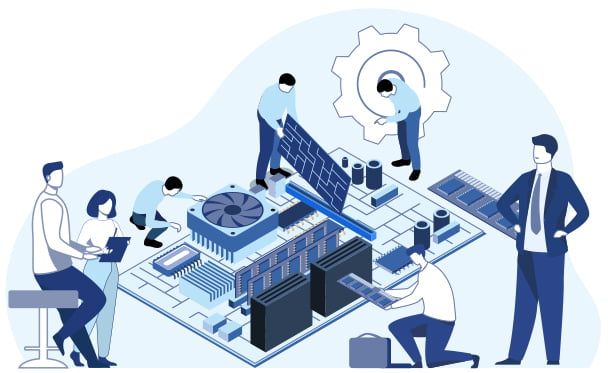
Applying software design principles in real-world projects not only makes the codebase “cleaner,” but also ensures that the system is easier to scale, easier to maintain, and minimizes future defects.
Start small, improve gradually: In the early stages, you do not need to apply every complex pattern. Begin with foundational principles such as SRP (Single Responsibility Principle), DRY (Don’t Repeat Yourself), and SoC (Separation of Concerns) to keep the codebase concise, with each component handling a clearly defined responsibility.
Use abstraction and dependency injection: Leveraging interfaces and Dependency Injection (DI) allows you to change or extend functionality without modifying the entire system. This is especially useful during unit testing – you can mock data and test individual components in isolation.
Code review and testing: Establish review checklists that include adherence to SRP, meaningful variable naming, minimal code duplication, and clear, understandable logic. Combining unit tests and integration tests helps ensure that each change does not negatively affect existing functionality.
Regular refactoring: When code smells are identified (hard-to-read code, duplication, or unnecessary complexity), refactor early. This helps control technical debt and keeps the project stable in the long term.
Clear documentation and architecture: A good architecture is always accompanied by concise documentation, such as module diagrams and a README that explains how to run, test, and deploy the system.
Real-world example: In a user management system, responsibilities can be clearly separated as follows:
- Controller: Receives and handles HTTP requests.
- Service: Executes business logic such as data validation and coordinating the processing flow.
- Repository: Interacts with the database for data persistence and retrieval.
This separation allows each component to operate independently, making the system easier to test, easier to modify, and well aligned with the principles of modern software design.
5. Common Challenges and Mistakes in Software Design
Even with a solid understanding of software design principles, applying them effectively in real – world projects can still be challenging without sufficient experience or clear direction. Below are common issues that development teams frequently encounter, along with practical approaches to address them.

Over-abstraction / Premature Abstraction: A classic mistake is abstracting too early by introducing multiple layers, interfaces, or abstractions before they are truly necessary. This often makes the codebase convoluted, harder to follow, and more difficult to debug. A simple rule of thumb is: if there is only one implementation at the moment, do not rush to create an interface – wait until there is a real need for extension before abstracting.
Over-engineering: Some developers tend to “prepare for every possible scenario” by designing overly complex systems. The result is prolonged development time, code that is difficult to read, and increased maintenance effort. Applying the YAGNI principle (You Aren’t Gonna Need It) helps avoid this trap – implement only what is genuinely required for the current needs, and extend later when new requirements actually arise.
Lack of Consistency Within the Team: Even a well-thought-out design can quickly become chaotic if each team member follows a different coding style. Inconsistencies in naming conventions, folder structures, or formatting rules degrade overall code quality. The solution is to establish clear coding standards, use style guides, adopt linting tools, and enforce code reviews to maintain consistency across the team.
Ignoring Testing and CI/CD: No matter how good a design is, the absence of testing and Continuous Integration (CI) will eventually lead to issues as the system grows. Setting up a CI pipeline enables automated testing, early detection of defects, and helps keep the system stable over time.
Note: Always prioritize readability over “cleverness” in code. Refactor early when you notice duplication or unnecessary complexity. Maintain a reasonable level of test coverage so you can confidently modify or extend the software. A good design is not defined by its sophistication, but by how easily people can understand and work with it.
6. Conclusion
Software design is a crucial bridge between conceptual thinking and real-world products – the point where technical reasoning meets creativity. A good design not only ensures that software operates reliably, but also enables development teams to scale, maintain, and adapt the system to future changes with greater ease.
Through this article, you and I have explored software design from its fundamental concepts and roles to core principles such as SOLID, DRY, KISS, and YAGNI, along with their practical applications and common challenges. It becomes clear that software design is not a single “step” in the development process; rather, it is an overarching mindset that runs throughout the entire lifecycle – from the very first line of code to the point at which the software matures.
What matters most is not the pursuit of absolute perfection, but learning how to design systems that are sufficiently robust, clear, and flexible. By understanding the “why” behind each principle, we gain the ability to determine “when” to apply it and “when” to simplify.
Software design is a continuous learning journey. Every project and every line of code is an opportunity to gain a deeper understanding of how humans and technology interact. And that, ultimately, is the beauty of programming – a discipline that is both a science and an art.
7. Reference
[1] R. C. Martin, Clean Architecture: A Craftsman’s Guide to Software Structure and Design. Prentice Hall, 2017.
[2] R. C. Martin, Agile Software Development: Principles, Patterns, and Practices. Prentice Hall, 2002.
[3] E. Gamma, R. Helm, R. Johnson, and J. Vlissides, Design Patterns: Elements of Reusable Object-Oriented Software. Addison-Wesley, 1994.
[4] S. McConnell, Code Complete: A Practical Handbook of Software Construction, 2nd ed. Microsoft Press, 2004.
[5] M. Fowler, Refactoring: Improving the Design of Existing Code, 2nd ed. Addison-Wesley, 2018.
[6] IEEE Computer Society, Guide to the Software Engineering Body of Knowledge (SWEBOK), Version 3.0, 2014.
[7] D. Thomas and A. Hunt, The Pragmatic Programmer: Your Journey to Mastery, 20th Anniversary ed. Addison-Wesley, 2019.
[8] M. Feathers, Working Effectively with Legacy Code. Prentice Hall, 2004.
[9] M. Hüttermann, DevOps for Developers. Apress, 2012.
[10] IEEE Std 1016-2009, IEEE Standard for Information Technology—Systems Design—Software Design Descriptions, IEEE Computer Society, 2009.