Posted in

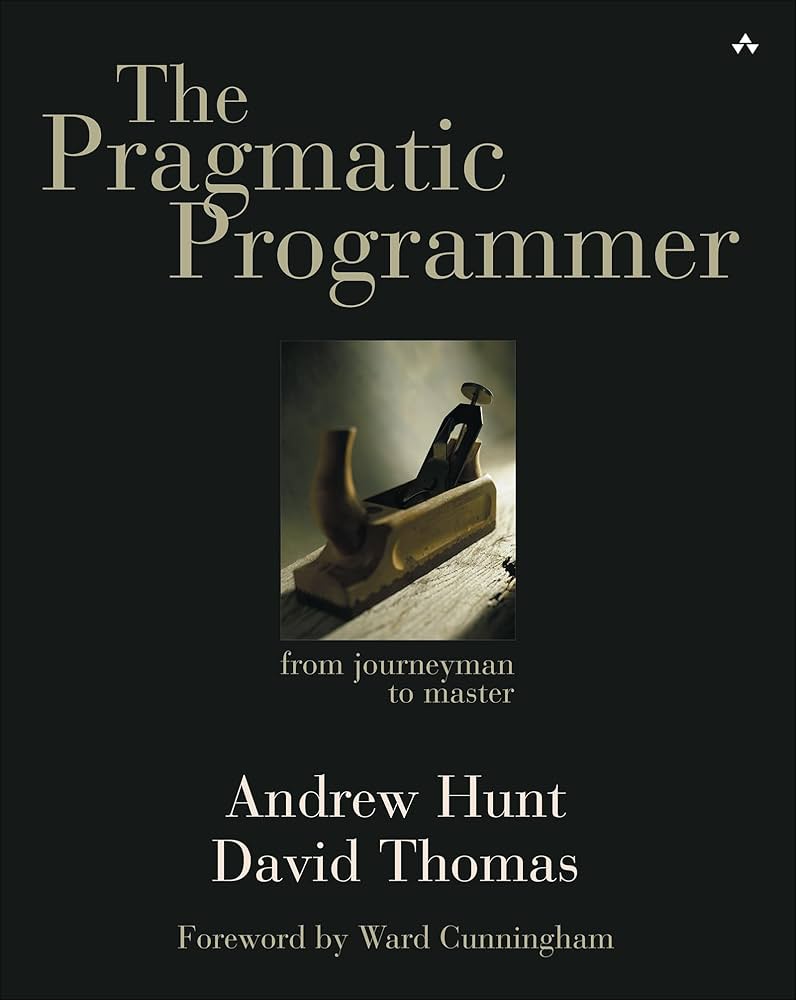
The Pragmatic Programmer: From Journeyman to Master

The Pragmatic Programmer

Trong hành trình trở thành một lập trình viên chuyên nghiệp, bên cạnh kiến thức kỹ thuật, sự tư duy độc lập và tư duy thực hành là hai yếu tố quan trọng quyết định sự bền bỉ và thành công của mỗi cá nhân. The Pragmatic Programmer của Andrew Hunt và David Thomas không chỉ đơn thuần là một cuốn sách về kỹ thuật lập trình, mà còn là một kim chỉ nam giúp bạn suy nghĩ như một người lập trình “thực sự”. Cuốn sách tạo ra ảnh hưởng sâu rộng trong cộng đồng phát triển phần mềm bởi sự kết hợp giữa lý thuyết và kinh nghiệm thực tiễn, giúp người đọc xác định lối tư duy đúng đắn ngay từ đầu

1. Thông tin cơ bản về cuốn sách

The Pragmatic Programmer: From Journeyman to Master là một trong những cuốn sách kinh điển nhất trong lĩnh vực phát triển phần mềm. Ban đầu xuất bản năm 1999, sau đó được cập nhật tái bản vào năm 2019 (20th Anniversary Edition) để phản ánh bối cảnh công nghệ hiện đại hơn nhưng vẫn giữ nguyên tinh thần cốt lõi.

Thông tin xuất bản

  • Tên tiếng Anh: The Pragmatic Programmer: From Journeyman to Master
  • Tác giả: Andrew HuntDavid Thomas
  • Năm xuất bản lần đầu: 1999
  • Tái bản: 2019 (20th Anniversary Edition)
  • Nhà xuất bản: Addison-Wesley Professional
  • Định dạng: Sách giấy, sách điện tử

Bối cảnh ra đời

Cuốn sách ra đời khi ngành phần mềm bắt đầu bùng nổ mạnh mẽ và nhu cầu xây dựng phần mềm chất lượng cao trở nên cấp thiết. Các tác giả không đơn thuần viết cho những lập trình viên mới vào nghề, mà còn dành cho những người đã và đang vật lộn với những vấn đề thiết kế, tư duy sáng tạo, giao tiếp hiệu quả, và trách nhiệm nghề nghiệp.

Điểm khác biệt lớn nhất của The Pragmatic Programmer là tính linh hoạt, tư duy thực hành,” và “chủ động học hỏi liên tục”. Đây không phải sách học thuật khô khan, mà là tập hợp những lời khuyên, bài học và triết lý giúp hình thành tư duy của một người lập trình chuyên nghiệp.

2. Tóm tắt sơ lược nội dung

The Pragmatic Programmer không đi sâu vào cú pháp hay các framework cụ thể. Thay vào đó, nó tập trung vào những nguyên lý và kỹ thuật tổng quát giúp bạn làm việc tốt hơn trong mọi môi trường phát triển phần mềm. Sách được chia thành nhiều chương, mỗi chương là một tập hợp các lời khuyên (“tip”) ngắn gọn, dễ tiếp thu.

Dưới đây là tóm tắt các nội dung chính:

2.1. Tư duy chủ động – Think Pragmatically

Một trong những thông điệp mạnh mẽ của cuốn sách là: hãy suy nghĩ chủ động khi viết phần mềm. Điều này bao gồm:

  • Đặt câu hỏi đúng: Tại sao thực hiện cách này thay vì cách khác?
  • Không làm theo hướng dẫn máy móc: Hiểu rõ lý do, mục tiêu trước khi cài đặt.
  • Chủ động tìm hiểu và cải tiến: Không ngừng xem xét các công cụ, quy trình mới.

Tư duy chủ động giúp bạn không trở thành người sao chép mã máy móc, mà là người xây dựng giải pháp thực sự phù hợp với ngữ cảnh.

2.2. Các kỹ thuật phát triển phần mềm

Tác giả giới thiệu nhiều kỹ thuật, ví dụ:

  • DRY – Don’t Repeat Yourself (Đừng lặp lại chính mình): Mỗi mảnh kiến thức chỉ xuất hiện một nơi. Việc lặp lại dẫn đến lỗi, khó bảo trì và thiếu nhất quán.
  • Orthogonality (Tính tách biệt): Các module độc lập, giảm phụ thuộc lẫn nhau.
  • Tracer Bullets: Tư duy viết phần mềm theo vòng lặp thử nghiệm – phản hồi – cải tiến, giống như bắn thử viên đạn để xác định mục tiêu.
  • Refactoring (Tái cấu trúc): Liên tục chỉnh sửa cấu trúc mã để giữ chất lượng mã sạch và dễ hiểu.

Những kỹ thuật này là nền tảng giúp bạn viết mã “sạch hơn”, dễ bảo trì và dễ mở rộng qua thời gian.

2.3. Công cụ và môi trường làm việc

Sách cũng bàn đến cách sắp xếp môi trường làm việc:

  • Sử dụng hệ thống quản lý phiên bản: Đây là yếu tố cơ bản nhưng cực kỳ quan trọng.
  • Tự động hóa quy trình build/test: Giảm lỗi do thao tác thủ công.
  • Giao tiếp rõ ràng với đồng đội và khách hàng: Đảm bảo tất cả hiểu rõ yêu cầu.

Khái niệm “pragmatic” không chỉ áp dụng với mã, mà còn áp dụng với cách bạn làm việc trong team.

2.4. Tư duy mở rộng nghề nghiệp

Ở phần tiếp theo, sách mở rộng sang các khía cạnh ngoài kỹ thuật:

  • Học tập suốt đời: Công nghệ thay đổi nhanh, kỹ năng phải phát triển liên tục.
  • Chu đáo với nghề nghiệp: Chủ động quản lý roadmap nghề nghiệp của mình.
  • Hiểu rõ ngữ cảnh doanh nghiệp: Biết được tại sao phần mềm được xây dựng và nó phục vụ nhu cầu gì.

Qua các phần trên, cuốn sách không chỉ cho bạn “công cụ” mà còn cả “tư duy” – điều quyết định sự khác biệt giữa một người lập trình trung bình và một lập trình viên xuất sắc.

3. Vì sao bạn nên đọc cuốn sách này?

Trong bối cảnh hàng trăm, hàng nghìn cuốn sách lập trình đang tràn ngập thị trường, bạn có thể tự hỏi: “Tại sao The Pragmatic Programmer lại xứng đáng để tôi đọc?”

3.1. Xây dựng tư duy đúng đắn – nền tảng của nghề lập trình

Nhiều cuốn sách kỹ thuật tập trung vào công nghệ cụ thể (Java, Python, React…), nhưng The Pragmatic Programmer tập trung vào tư duy giải quyết vấn đề. Điều này là ưu thế lớn nhất của cuốn sách, vì:

  • Ngôn ngữ và công cụ thay đổi, nhưng tư duy thiết kế và giải quyết vấn đề là bất biến.
  • Bạn học cách tư duy độc lập, không phụ thuộc vào framework hay tài liệu cụ thể.

Đọc cuốn sách này giúp bạn phát triển suy nghĩ hệ thống hơn, hiểu sâu hơn bản chất của phần mềm.

3.2. Ngắn gọn, dễ tiếp thu – nhưng sâu sắc

Một điểm mạnh khác của sách là cách trình bày từng đoạn nhỏ, dễ đọc, mỗi “tip” là một bài học giá trị. Bạn có thể đọc từng phần riêng lẻ mà vẫn thu được bài học hữu ích. Vì vậy, dù bạn có bận rộn, vẫn có thể đọc và áp dụng từng chỉ dẫn ngay lập tức.

3.3. Áp dụng vào thực tế ngay lập tức

Không giống những sách học thuật lý thuyết suông, The Pragmatic Programmer chứa đầy bài học bạn có thể áp dụng ngay vào dự án thực tế:

  • Giảm lỗi do lặp lại mã.
  • Tạo môi trường làm việc tự động.
  • Tư duy test-driven, hỗ trợ phát triển bền vững.

Các bài học trong cuốn sách giúp bạn cải thiện chất lượng mã cũng như tốc độ phát triển phần mềm một cách hiệu quả.

3.4. Phù hợp với mọi giai đoạn trong sự nghiệp

Dù bạn là sinh viên mới ra trường hay là lập trình viên nhiều năm kinh nghiệm, cuốn sách đều mang lại giá trị:

  • Người mới có tư duy nền tảng đúng.
  • Người có kinh nghiệm soi lại cách làm việc để tối ưu.
  • Người team lead cải thiện quy trình làm việc nhóm.

4. Cuốn sách này dành cho ai?

The Pragmatic Programmer phù hợp với hầu hết những ai đang hoặc sẽ làm việc trong lĩnh vực phát triển phần mềm, bất kể trình độ hay vai trò cụ thể.

  • Sinh viên và người mới học lập trình: Cuốn sách giúp hình thành tư duy đúng ngay từ đầu, tránh những thói quen sai lầm phổ biến và xây dựng nền tảng vững chắc cho nghề lập trình.
  • Lập trình viên đã có kinh nghiệm: Đây là tài liệu giúp rà soát và cải thiện cách viết mã, cách tổ chức công việc và cách tiếp cận vấn đề một cách hiệu quả hơn.
  • Trưởng nhóm kỹ thuật, team lead, kiến trúc sư phần mềm: Sách cung cấp góc nhìn tổng thể về chất lượng mã nguồn, quy trình làm việc và tư duy phát triển bền vững trong nhóm.
  • Những ai quan tâm đến nghề nghiệp phần mềm lâu dài: Không chỉ dừng ở kỹ thuật, cuốn sách còn phù hợp với những người muốn phát triển tư duy chuyên nghiệp và chủ động trong sự nghiệp công nghệ.

The Pragmatic Programmer của Andrew Hunt và David Thomas không phải là một cuốn sách kỹ thuật đơn thuần, mà là một kim chỉ nam cho tư duy và hành vi nghề nghiệp trong phát triển phần mềm. Từ những nguyên lý tối thiểu như DRY, đến các kỹ thuật như refactoring và automation, cuốn sách giúp bạn từng bước xây dựng thói quen và tư duy đúng đắn để trở thành lập trình viên xuất sắc.

Nếu bạn đang tìm kiếm một tài liệu nền tảng để xây dựng tư duy lập trình vững chắc, cải thiện kỹ năng làm việc, và chuẩn bị cho các thách thức dài hạn trong sự nghiệp phần mềm, The Pragmatic Programmer là một trong những cuốn sách bạn phải đọc ít nhất một lần trong đời.

5. Tải xuống, trải nghiệm

Bạn có thể dễ dàng tải xuống hoặc đọc trực tuyến cuốn sách này trên nhiều nền tảng khác nhau như SlideShare, Scribd, Issuu hay Studylid. Mỗi nền tảng đều hỗ trợ đọc trực tiếp, lưu lại để xem sau và tải về khi cần, rất tiện cho cả  máy tính lẫn điện thoại. Hãy chọn nơi phù hợp nhất với thói quen sử dụng của bạn để trải nghiệm trọn vẹn nội dung cuốn sách.

6. Tài liệu tham khảo

[1] A. Hunt and D. Thomas, The Pragmatic Programmer: From Journeyman to Master, 1st ed. Boston, MA, USA: Addison-Wesley Professional, 1999.
[2] A. Hunt and D. Thomas, The Pragmatic Programmer: Your Journey to Mastery, 20th Anniversary ed. Boston, MA, USA: Addison-Wesley Professional, 2019.
[3] S. McConnell, Code Complete: A Practical Handbook of Software Construction, 2nd ed. Redmond, WA, USA: Microsoft Press, 2004.
[4] R. C. Martin, Clean Code: A Handbook of Agile Software Craftsmanship, Upper Saddle River, NJ, USA: Prentice Hall, 2008.
[5] E. Gamma, R. Helm, R. Johnson, and J. Vlissides, Design Patterns: Elements of Reusable Object-Oriented Software, Boston, MA, USA: Addison-Wesley, 1994.
[6] Kiến Thức Mở, “Code Complete – A Practical Handbook of Software Construction,
[7] OpenDev, Foundations of Information Systems. Available: https://kienthucmo.com/en/foundations-of-information-systems/
[8] OpenDev, Introduction to  Computer Science. Available: https://kienthucmo.com/en/introduction-to-computer-science/
[9] OpenDev, Principles of Data Science. Available: https://kienthucmo.com/en/principles-of-data-science/

Để lại một bình luận

Email của bạn sẽ không được hiển thị công khai. Các trường bắt buộc được đánh dấu *

Posted in

The Pragmatic Programmer: From Journeyman to Master

The Pragmatic Programmer

On the journey to becoming a professional programmer, beyond technical knowledge, independent thinking and a hands-on, practical mindset are two critical factors that determine an individual’s long-term resilience and success. The Pragmatic Programmer by Andrew Hunt and David Thomas is not merely a book about programming techniques; it is a compass that helps readers learn how to think like a “real” programmer. The book has had a profound impact on the software development community thanks to its blend of theory and real-world experience, guiding readers to establish the right mindset from the very beginning.

1. Basic Information about the Book

The Pragmatic Programmer: From Journeyman to Master is widely regarded as one of the most classic and influential books in the field of software development. Originally published in 1999, it was later revised and reissued in 2019 as the 20th Anniversary Edition to reflect a more modern technological landscape, while still preserving its core philosophy and spirit.

Publication Information

  • English Title: The Pragmatic Programmer: From Journeyman to Master
  • Authors: Andrew Hunt and David Thomas
  • First Publication Year: 1999
  • Revised Edition: 2019 (20th Anniversary Edition)
  • Publisher: Addison-Wesley Professional
  • Formats: Print book and e-book

Background and Context of Publication

The book was published at a time when the software industry was experiencing rapid growth and the demand for high-quality software was becoming increasingly urgent. The authors did not write solely for novice programmers; rather, they also addressed experienced practitioners who were grappling with challenges related to design, creative thinking, effective communication, and professional responsibility.

The most distinctive strengths of The Pragmatic Programmer lie in its flexibility, its emphasis on practical thinking, and its advocacy of proactive, continuous learning. Rather than being a dry academic text, the book is a collection of advice, lessons, and philosophies that help shape the mindset of a professional programmer.

The Pragmatic Programmer

2. Content Overview

The Pragmatic Programmer does not delve deeply into specific syntax or frameworks. Instead, it focuses on general principles and techniques that help developers work more effectively across any software development environment. The book is organized into multiple chapters, each consisting of concise, easy-to-digest pieces of advice (“tips”).

Below is a summary of the main contents:

2.1. Proactive Thinking – Think Pragmatically

One of the book’s strongest messages is the importance of thinking proactively when developing software. This includes:

  • Asking the right questions: Why choose this approach instead of another?
  • Avoiding mechanical adherence to instructions: fully understanding the reasons and objectives before implementation.
  • Proactively learning and improving: continuously evaluating and exploring new tools and processes.

A proactive mindset prevents you from becoming a mechanical code copier and instead enables you to build solutions that are genuinely appropriate to the given context.

2.2. Software Development Techniques

The authors introduce a variety of techniques, for example:

  • DRY – Don’t Repeat Yourself: Each piece of knowledge should have a single, authoritative representation within a system. Duplication leads to errors, increased maintenance costs, and inconsistency.
  • Orthogonality (Separation of Concerns): Modules should be independent and loosely coupled, minimizing mutual dependencies and allowing changes in one component without unintended effects on others.
  • Tracer Bullets: A mindset of developing software through iterative cycles of experimentation, feedback, and refinement—similar to firing tracer rounds to validate direction and adjust toward the target.
  • Refactoring: Continuously improving the internal structure of code to maintain clarity, cleanliness, and long-term maintainability without changing its external behavior.

These techniques form a solid foundation for writing “cleaner” code that is easier to maintain and more adaptable to change over time.

2.3. Tools and Working Environment

The book also discusses how to organize and optimize the working environment:

  • Using a Version Control System: This is a fundamental yet critically important element in professional software development.
  • Automating build and test processes: minimizing errors caused by manual operations and increasing consistency and reliability in the development workflow.
  • Clear communication with teammates and clients: ensuring that all parties have a shared and accurate understanding of requirements.

The concept of being “pragmatic” applies not only to code, but also to the way you collaborate and work within a team.

2.4. Expanding Your Professional Mindset

In the following section, the book broadens its scope to aspects beyond pure technical skills:

  • Lifelong learning: technology evolves rapidly, so skills must be continuously developed and updated.
  • Professional responsibility: proactively managing and planning your own career roadmap.
  • Understanding the business context: knowing why the software is being built and what needs it is intended to serve.

Through these sections, the book provides not only practical “tools” but also a way of thinking—an essential factor that distinguishes an average programmer from an outstanding one.

3. Why Should You Read This Book?

In a market flooded with hundreds—if not thousands—of programming books, you may naturally ask yourself: “Why is The Pragmatic Programmer worth reading?”

3.1. Building the Right Mindset – The Foundation of a Programming Career

Many technical books focus on specific technologies (Java, Python, React, etc.), whereas The Pragmatic Programmer emphasizes problem-solving mindset. This is the book’s greatest strength, because:

  • Programming languages and tools may change, but sound design thinking and problem-solving skills remain timeless and enduring.
  • You learn how to think independently, rather than relying solely on specific frameworks or documentation.

Reading this book helps you develop more systematic thinking and gain a deeper understanding of the fundamental nature of software.

3.2. Concise and Accessible – Yet Profound

Another strength of the book is its presentation in short, easily digestible sections, with each “tip” conveying a valuable lesson. You can read each part independently and still gain useful insights. Therefore, even if you are busy, you can read and apply each piece of guidance immediately.

3.3. Immediate Practical Application

Unlike purely theoretical academic books, The Pragmatic Programmer is filled with lessons that can be immediately applied to real-world projects:

  • Reducing errors caused by code duplication.
  • Creating an automated working environment.
  • Adopting a test-driven mindset to support sustainable software development.

The lessons in the book help you improve both code quality and software development speed effectively.

3.4. Suitable for Every Stage of Your Career

Whether you are a recent graduate or an experienced developer, the book offers valuable insights:

  • Beginners develop a strong foundational mindset.
  • Experienced professionals can reevaluate their practices to optimize their workflows.
  • Team leads can enhance team workflows and improve collaboration processes.

4. Who Is This Book For?

The Pragmatic Programmer is suitable for virtually anyone working—or planning to work—in the field of software development, regardless of experience level or specific role.

  • Students and novice programmers: the book helps establish the right mindset from the start, avoid common bad habits, and build a solid foundation for a programming career.
  • Experienced developers: this book serves as a guide to review and enhance coding practices, work organization, and problem-solving approaches more effectively.
  • Technical team leads, software architects, and managers: the book offers a comprehensive perspective on code quality, workflow processes, and sustainable development thinking within a team.
  • Those interested in a long-term software career: beyond technical skills, the book is well-suited for individuals seeking to cultivate a professional and proactive mindset in their tech careers.

The Pragmatic Programmer by Andrew Hunt and David Thomas is not merely a technical book; it serves as a guide to the mindset and professional behaviors essential in software development. From fundamental principles such as DRY to techniques like refactoring and automation, the book helps readers gradually build the right habits and ways of thinking to become outstanding programmers.

If you are looking for a foundational resource to develop a solid programming mindset, enhance your work skills, and prepare for long-term challenges in a software career, The Pragmatic Programmer is a book you should read at least once in your lifetime.

5. Download and Experience

You can easily download or read this book online on various platforms such as SlideShare, Scribd, Issuu, or Studylid. Each platform allows direct reading, saving for later, and downloading when needed, making it convenient for both computers and mobile devices. Choose the platform that best fits your usage habits to fully experience the book’s content.

6. References

[1] A. Hunt and D. Thomas, The Pragmatic Programmer: From Journeyman to Master, 1st ed. Boston, MA, USA: Addison-Wesley Professional, 1999.
[2] A. Hunt and D. Thomas, The Pragmatic Programmer: Your Journey to Mastery, 20th Anniversary ed. Boston, MA, USA: Addison-Wesley Professional, 2019.
[3] S. McConnell, Code Complete: A Practical Handbook of Software Construction, 2nd ed. Redmond, WA, USA: Microsoft Press, 2004.
[4] R. C. Martin, Clean Code: A Handbook of Agile Software Craftsmanship, Upper Saddle River, NJ, USA: Prentice Hall, 2008.
[5] E. Gamma, R. Helm, R. Johnson, and J. Vlissides, Design Patterns: Elements of Reusable Object-Oriented Software, Boston, MA, USA: Addison-Wesley, 1994.
[6] Kiến Thức Mở, “Code Complete – A Practical Handbook of Software Construction,
[7] OpenDev, Foundations of Information Systems. Available: https://kienthucmo.com/en/foundations-of-information-systems/
[8] OpenDev, Introduction to  Computer Science. Available: https://kienthucmo.com/en/introduction-to-computer-science/
[9] OpenDev, Principles of Data Science. Available: https://kienthucmo.com/en/principles-of-data-science/

Để lại một bình luận

Email của bạn sẽ không được hiển thị công khai. Các trường bắt buộc được đánh dấu *