Posted in

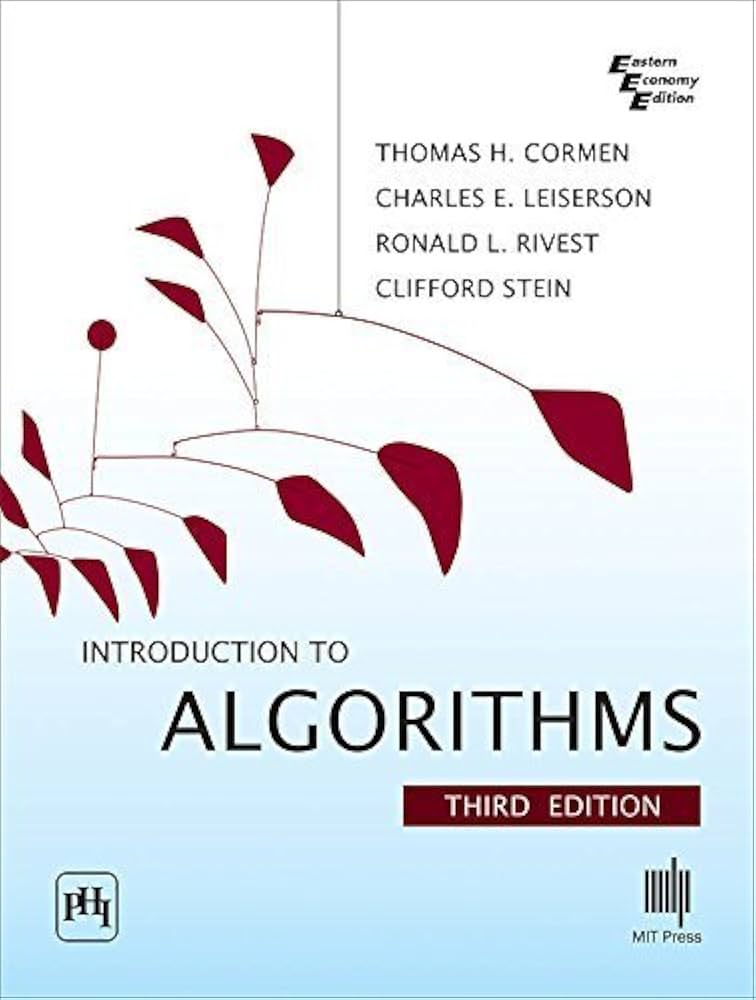
Introduction to Algorithms, 3rd Edition

Introduction to Algorithms

Trong lĩnh vực công nghệ thông tin, đặc biệt là khoa học máy tính và kỹ thuật phần mềm, thuật toán đóng vai trò như “xương sống” của mọi hệ thống. Dù là xây dựng một ứng dụng web đơn giản, tối ưu hệ thống cơ sở dữ liệu hay phát triển các mô hình trí tuệ nhân tạo phức tạp, tất cả đều dựa trên việc lựa chọn và triển khai thuật toán phù hợp. Tuy nhiên, việc học và hiểu thuật toán không chỉ dừng lại ở mức “biết dùng”, mà còn đòi hỏi nền tảng lý thuyết vững chắc để phân tích, đánh giá và tối ưu.

Trong số rất nhiều tài liệu về thuật toán, Introduction to Algorithms (thường được gọi tắt là CLRS, theo chữ cái đầu của bốn tác giả) được xem là cuốn sách kinh điển và có ảnh hưởng sâu rộng nhất. Đây không chỉ là một giáo trình chuẩn trong các trường đại học hàng đầu thế giới, mà còn là tài liệu tham khảo lâu dài cho sinh viên, lập trình viên và các nhà nghiên cứu. Cuốn sách cung cấp một cái nhìn toàn diện, có hệ thống và chặt chẽ về thuật toán, từ những khái niệm cơ bản đến các chủ đề nâng cao.

1. Thông tin cơ bản về cuốn sách

  • Tên sách: Introduction to Algorithms
  • Tác giả: Thomas H. Cormen, Charles E. Leiserson, Ronald L. Rivest, Clifford Stein
  • Nhà xuất bản: MIT Press
  • Lĩnh vực: Khoa học máy tính, thuật toán và cấu trúc dữ liệu
  • Ngôn ngữ: Tiếng Anh
  • Đối tượng chính: Sinh viên đại học – sau đại học ngành CNTT, khoa học máy tính, kỹ sư phần mềm

Cuốn sách lần đầu được xuất bản vào năm 1990 và liên tục được cập nhật qua nhiều ấn bản. Mỗi lần tái bản đều bổ sung thuật toán mới, cải tiến cách trình bày và mở rộng các chủ đề hiện đại, phản ánh sự phát triển không ngừng của khoa học máy tính. Điều làm nên giá trị bền vững của Introduction to Algorithms là cách tiếp cận mang tính học thuật cao nhưng vẫn giữ được tính hệ thống và chuẩn mực, giúp người đọc không chỉ học “cách làm” mà còn hiểu “vì sao phải làm như vậy”.

2. Tóm tắt sơ lược nội dung

Nội dung của Introduction to Algorithms được tổ chức một cách logic, từ nền tảng đến nâng cao, cho phép người học tiếp cận dần dần mà không bị rời rạc.

2.1. Nền tảng về thuật toán và phân tích độ phức tạp

Ngay từ những chương đầu, cuốn sách giới thiệu khái niệm thuật toán, cách mô tả thuật toán và phương pháp đánh giá hiệu năng. Trọng tâm là phân tích độ phức tạp thời gian và không gian, với ký hiệu Big-O, Big-Theta và Big-Omega. Phần này giúp người đọc hiểu cách so sánh các thuật toán không chỉ dựa trên kết quả, mà dựa trên hiệu quả khi dữ liệu đầu vào tăng lên.

2.2. Thuật toán sắp xếp và tìm kiếm

Đây là một trong những phần quan trọng và nổi tiếng nhất của sách. Các thuật toán sắp xếp cơ bản như Insertion Sort, Merge Sort, Heap Sort, Quick Sort được trình bày chi tiết, kèm theo phân tích ưu – nhược điểm và trường hợp sử dụng phù hợp. Bên cạnh đó, các kỹ thuật tìm kiếm và xử lý mảng cũng được giải thích rõ ràng, giúp người học nắm vững nền tảng cốt lõi.

2.3. Cấu trúc dữ liệu

Cuốn sách dành nhiều chương để trình bày các cấu trúc dữ liệu quan trọng như stack, queue, linked list, heap, cây nhị phân, cây đỏ-đen và bảng băm (hash table). Mỗi cấu trúc dữ liệu đều được phân tích về cách cài đặt, độ phức tạp và vai trò trong việc tối ưu thuật toán. Điều này giúp người đọc hiểu mối quan hệ mật thiết giữa cấu trúc dữ liệu và hiệu năng chương trình.

2.4. Kỹ thuật thiết kế thuật toán

Một điểm mạnh lớn của Introduction to Algorithms là phần trình bày các chiến lược thiết kế thuật toán, bao gồm:

  • Chia để trị (Divide and Conquer)
  • Quy hoạch động (Dynamic Programming)
  • Tham lam (Greedy Algorithms)

Thông qua các ví dụ kinh điển như bài toán ba lô, dãy con chung dài nhất hay bài toán lập lịch, người đọc học được cách tiếp cận bài toán một cách có hệ thống, thay vì chỉ viết code theo cảm tính.

2.5. Thuật toán đồ thị và chủ đề nâng cao

Ở các chương sau, cuốn sách đi sâu vào thuật toán đồ thị như BFS, DFS, thuật toán đường đi ngắn nhất, cây khung nhỏ nhất, cũng như các chủ đề nâng cao như NP-Completeness và thuật toán xấp xỉ. Đây là phần đặc biệt quan trọng đối với sinh viên và nhà nghiên cứu, vì nó đặt nền móng cho các lĩnh vực như tối ưu hóa, trí tuệ nhân tạo và khoa học dữ liệu.

3. Vì sao bạn nên đọc cuốn sách này?

Thứ nhất, Introduction to Algorithms cung cấp một nền tảng lý thuyết vững chắc. Thay vì chỉ dạy cách viết mã cho một ngôn ngữ cụ thể, cuốn sách giúp người đọc hiểu bản chất của thuật toán, từ đó có thể áp dụng linh hoạt trong nhiều bối cảnh khác nhau.

Thứ hai, cuốn sách rèn luyện tư duy phân tích và giải quyết vấn đề. Thông qua việc chứng minh, phân tích và so sánh, người học phát triển khả năng suy luận logic – kỹ năng cực kỳ quan trọng đối với lập trình viên và kỹ sư phần mềm.

Thứ ba, đây là tài liệu chuẩn mực và lâu dài. Dù công nghệ và ngôn ngữ lập trình thay đổi nhanh chóng, các nguyên lý thuật toán trong sách vẫn giữ nguyên giá trị. Điều này khiến cuốn sách trở thành tài liệu tham khảo có thể sử dụng trong nhiều năm.

Cuối cùng, Introduction to Algorithms là “thước đo” học thuật. Việc nắm vững nội dung cuốn sách không chỉ giúp bạn học tốt ở trường đại học, mà còn là lợi thế lớn khi tham gia các kỳ thi thuật toán, phỏng vấn kỹ thuật hoặc nghiên cứu chuyên sâu.

4. Cuốn sách này dành cho ai?

Cuốn sách đặc biệt phù hợp với:

  • Sinh viên ngành công nghệ thông tin, khoa học máy tính đang học các môn cấu trúc dữ liệu và thuật toán.
  • Học viên cao học và nghiên cứu sinh cần tài liệu học thuật chuẩn mực.
  • Lập trình viên, kỹ sư phần mềm muốn củng cố nền tảng và nâng cao tư duy thuật toán.
  • Người chuẩn bị phỏng vấn kỹ thuật tại các công ty công nghệ lớn, nơi thuật toán là tiêu chí đánh giá quan trọng.

Tuy nhiên, do tính học thuật cao, cuốn sách có thể không phù hợp với người mới bắt đầu hoàn toàn, chưa có nền tảng lập trình cơ bản.

5. Kết luận

Introduction to Algorithms không phải là một cuốn sách “dễ đọc”, nhưng lại là một trong những cuốn sách đáng đọc nhất trong lĩnh vực khoa học máy tính. Với nội dung toàn diện, cách trình bày chặt chẽ và giá trị học thuật lâu dài, cuốn sách đã, đang và sẽ tiếp tục là nền tảng cho hàng triệu sinh viên và kỹ sư trên toàn thế giới. Nếu bạn nghiêm túc theo đuổi con đường công nghệ thông tin, đây là cuốn sách mà bạn nên có trong tủ sách của mình.

6. Tải xuống, trải nghiệm

Bạn có thể dễ dàng tải xuống hoặc đọc trực tuyến cuốn sách này trên nhiều nền tảng khác nhau như SlideShare, Scribd, Issuu hay Studylid. Mỗi nền tảng đều hỗ trợ đọc trực tiếp, lưu lại để xem sau và tải về khi cần, rất tiện cho cả  máy tính lẫn điện thoại. Hãy chọn nơi phù hợp nhất với thói quen sử dụng của bạn để trải nghiệm trọn vẹn nội dung cuốn sách.

7. Tài liệu tham khảo (chuẩn IEEE)

[1] T. H. Cormen, C. E. Leiserson, R. L. Rivest, and C. Stein, Introduction to Algorithms, 3rd ed. Cambridge, MA, USA: MIT Press, 2009.
[2] D. E. Knuth, The Art of Computer Programming, vol. 1–3. Boston, MA, USA: Addison-Wesley, 1997.
[3] S. S. Skiena, The Algorithm Design Manual, 2nd ed. London, UK: Springer, 2008.
[4] R. Sedgewick and K. Wayne, Algorithms, 4th ed. Boston, MA, USA: Addison-Wesley, 2011.
[5] Goodreads, “The Mythical Man-Month: Essays on Software Engineering,” [Online]. Available:
[6] OpenDev, Foundations of Information Systems. Available: https://kienthucmo.com/en/foundations-of-information-systems/
[7] OpenDev, Introduction to  Computer Science. Available: https://kienthucmo.com/en/introduction-to-computer-science/
[8] OpenDev, Principles of Data Science. Available: https://kienthucmo.com/en/principles-of-data-science/

Để lại một bình luận

Email của bạn sẽ không được hiển thị công khai. Các trường bắt buộc được đánh dấu *

Posted in

Introduction to Algorithms, 3rd Edition

Introduction to Algorithms

In the field of information technology, particularly computer science and software engineering, algorithms play the role of the “backbone” of every system. Whether it is building a simple web application, optimizing a database system, or developing complex artificial intelligence models, all of these rely on the selection and implementation of appropriate algorithms. However, learning and understanding algorithms does not stop at merely “knowing how to use them”; it also requires a solid theoretical foundation to analyze, evaluate, and optimize them effectively.

Among the vast number of resources on algorithms, Introduction to Algorithms (commonly known as CLRS, derived from the initials of its four authors) is regarded as a classic and the most influential book in the field. It is not only a standard textbook at leading universities around the world, but also a long-term reference for students, programmers, and researchers. The book provides a comprehensive, systematic, and rigorous view of algorithms, ranging from fundamental concepts to advanced topics.

1. Basic Information about the Book

  • Book title: Introduction to Algorithms
  • Authors: Thomas H. Cormen, Charles E. Leiserson, Ronald L. Rivest, Clifford Stein
  • Publisher: MIT Press
  • Field: Computer Science, Algorithms, and Data Structures
  • Language: English
  • Primary audience: Undergraduate and graduate students in Information Technology, Computer Science, and Software Engineering

The book was first published in 1990 and has been continuously updated through multiple editions. Each new edition introduces new algorithms, improves the presentation, and expands modern topics, reflecting the ongoing development of computer science. What gives Introduction to Algorithms its enduring value is its highly academic approach combined with a systematic and rigorous structure, enabling readers not only to learn “how to do things” but also to understand “why they should be done that way.”

Introduction to Algorithms

2. Content Overview

Nội dung của Introduction to Algorithms được tổ chức một cách logic, từ nền tảng đến nâng cao, cho phép người học tiếp cận dần dần mà không bị rời rạc.

2.1. Foundations of Algorithms and Complexity Analysis

From the very first chapters, the book introduces the concept of algorithms, methods for describing algorithms, and techniques for evaluating their performance. The focus is on time and space complexity analysis, using Big-O, Big-Theta, and Big-Omega notation. This section helps readers understand how to compare algorithms not merely based on their outputs, but on their efficiency as the input size grows.

2.2. Sorting and Searching Algorithms

This is one of the most important and well-known sections of the book. Fundamental sorting algorithms such as Insertion Sort, Merge Sort, Heap Sort, and Quick Sort are presented in detail, along with analyses of their strengths, weaknesses, and appropriate use cases. In addition, searching techniques and array-processing methods are clearly explained, helping learners build a solid foundational understanding.

2.3. Data Structures

The book devotes several chapters to presenting essential data structures such as stacks, queues, linked lists, heaps, binary trees, red–black trees, and hash tables. Each data structure is analyzed in terms of its implementation, complexity, and role in algorithm optimization. This approach helps readers understand the close relationship between data structures and program performance.

2.4. Algorithm Design Techniques

One of the major strengths of Introduction to Algorithms is its presentation of algorithm design strategies, including:

  • Divide and Conquer
  • Dynamic Programming
  • Greedy Algorithms

Through classic examples such as the knapsack problem, the longest common subsequence, and scheduling problems, readers learn how to approach problems in a systematic manner, rather than merely writing code based on intuition.

2.5. Graph Algorithms and Advanced Topics

In the later chapters, the book delves into graph algorithms such as BFS, DFS, shortest path algorithms, and minimum spanning trees, as well as advanced topics including NP-Completeness and approximation algorithms. This section is particularly important for students and researchers, as it lays the foundation for fields such as optimization, artificial intelligence, and data science.

3. Why Should You Read This Book?

First, Introduction to Algorithms provides a solid theoretical foundation. Rather than merely teaching how to write code in a specific programming language, the book helps readers understand the underlying nature of algorithms, enabling them to apply this knowledge flexibly across a wide range of contexts.

Second, the book cultivates analytical thinking and problem-solving skills. Through proofs, analysis, and comparison, learners develop logical reasoning abilities—skills that are critically important for programmers and software engineers.

Third, it is a standard and enduring reference. While technologies and programming languages evolve rapidly, the algorithmic principles presented in the book remain fundamentally unchanged. This makes it a reference that can be relied upon for many years.

Finally, Introduction to Algorithms serves as an academic “benchmark.” Mastering the content of this book not only helps students excel in university studies, but also provides a significant advantage in algorithm competitions, technical interviews, and advanced research.

4. Who Is This Book For?

The book is particularly well suited for:

  • Students majoring in Information Technology and Computer Science who are studying data structures and algorithms.
  • Graduate students and doctoral candidates who require a rigorous and authoritative academic reference.
  • Programmers and software engineers who want to strengthen their foundations and enhance their algorithmic thinking.
  • Individuals preparing for technical interviews at major technology companies, where algorithms are a key evaluation criterion.

However, due to its highly academic nature, the book may not be suitable for complete beginners who lack a basic programming background.

5. Conclusion

Introduction to Algorithms is not an “easy-to-read” book, but it is one of the most worthwhile books in the field of computer science. With its comprehensive content, rigorous presentation, and long-lasting academic value, the book has been, and will continue to be, a foundation for millions of students and engineers worldwide. If you are serious about pursuing a career in information technology, this is a book that deserves a place on your bookshelf.

6. Download and Explore

You can easily download or read this book online on various platforms such as SlideShare, Scribd, Issuu, or Studylid. Each platform supports online reading, saving for later access, and downloading when needed, making it convenient for both computers and mobile devices. Choose the platform that best fits your usage habits to fully experience the book’s content.

7. References

[1] T. H. Cormen, C. E. Leiserson, R. L. Rivest, and C. Stein, Introduction to Algorithms, 3rd ed. Cambridge, MA, USA: MIT Press, 2009.
[2] D. E. Knuth, The Art of Computer Programming, vol. 1–3. Boston, MA, USA: Addison-Wesley, 1997.
[3] S. S. Skiena, The Algorithm Design Manual, 2nd ed. London, UK: Springer, 2008.
[4] R. Sedgewick and K. Wayne, Algorithms, 4th ed. Boston, MA, USA: Addison-Wesley, 2011.
[5] Goodreads, “The Mythical Man-Month: Essays on Software Engineering,” [Online]. Available:
[6] OpenDev, Foundations of Information Systems. Available: https://kienthucmo.com/en/foundations-of-information-systems/
[7] OpenDev, Introduction to  Computer Science. Available: https://kienthucmo.com/en/introduction-to-computer-science/
[8] OpenDev, Principles of Data Science. Available: https://kienthucmo.com/en/principles-of-data-science/

Để lại một bình luận

Email của bạn sẽ không được hiển thị công khai. Các trường bắt buộc được đánh dấu *