Posted in

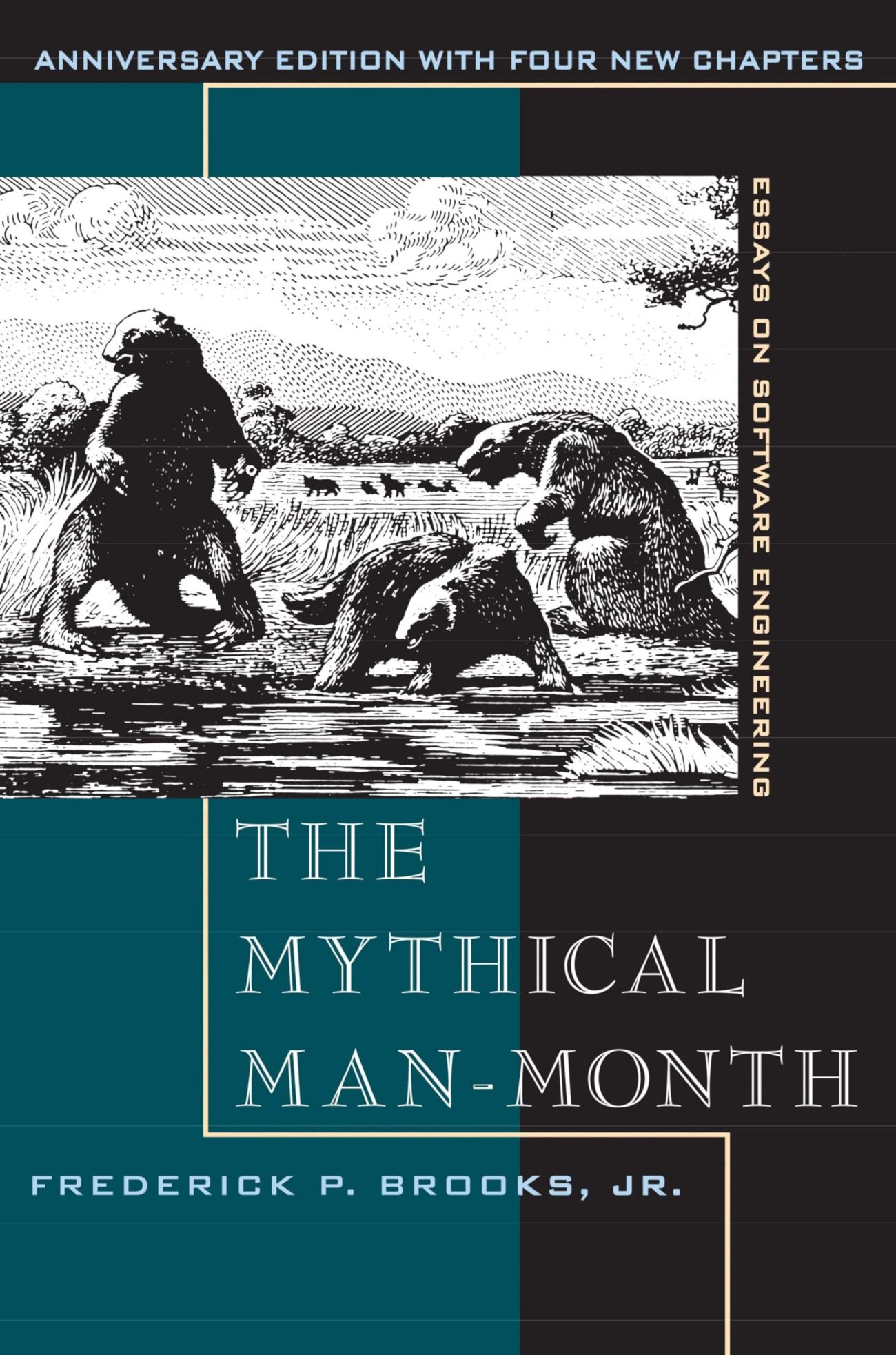
The Mythical Man-month: Essays on Software Engineering

The Mythical Man-month: Essays on Software Engineering

Trong thế giới phát triển phần mềm và kỹ thuật dự án, ít có cuốn sách nào được nhắc đến với sự tôn trọng lâu bền như The Mythical Man‑Month: Essays on Software Engineering (tạm dịch Huyền thoại con‑người‑tháng: Các tiểu luận về Kỹ thuật Phần mềm). Dù được xuất bản lần đầu vào năm 1975, hơn bốn thập kỷ đã trôi qua nhưng nhiều nguyên lý từ cuốn sách này vẫn là kim chỉ nam cho các nhà quản lý dự án, kỹ sư phần mềm, và bất kỳ cá nhân nào làm việc trong môi trường phát triển sản phẩm phức tạp. Cuốn sách không chỉ cung cấp những quan sát sinh động về thực tiễn quản lý nhân lực và thời gian trong dự án phần mềm, mà còn khám phá sâu vào bản chất con người trong kỹ thuật — một yếu tố quyết định thành công hoặc thất bại của mọi nỗ lực kỹ thuật. Đây là lý do vì sao The Mythical Man‑Month thường được ví như “Kinh thánh của Software Engineering” trong giới công nghệ thông tin.

1. Thông Tin Cơ Bản Về Cuốn Sách

The Mythical Man‑Month: Essays on Software Engineering là một tuyển tập các bài tiểu luận do Frederick P. Brooks, Jr. viết — một kỹ sư phần mềm và nhà quản lý dự án cấp cao người Mỹ. Tác giả từng giữ vai trò quản lý dự án phát triển hệ thống IBM System/360 và phần mềm OS/360, những dự án lớn và phức tạp vào thập niên 1960 và 1970. Những trải nghiệm này là nền tảng cho những bài học ông chia sẻ trong sách.

Cuốn sách được xuất bản lần đầu năm 1975 bởi nhà xuất bản Addison‑Wesley, và đã trải qua nhiều tái bản, trong đó phiên bản kỷ niệm (Anniversary Edition) ra mắt năm 1995 bổ sung thêm các chương và bài viết phụ như No Silver Bullet (Không có Viên đạn Bạc), phản ánh thêm quan điểm của tác giả về những sai lầm phổ biến trong quản lý dự án phần mềm.

Sách viết bằng tiếng Anh, nhưng đã được chuyển ngữ sang nhiều thứ tiếng khác nhau và được giảng dạy, trích dẫn rộng rãi trên toàn thế giới. Nội dung tập trung vào các nguyên lý, thực hành và sai lầm thường gặp trong thiết kế và quản lý phần mềm — đặc biệt các dự án lớn với nhiều người tham gia.

2. Tóm Tắt Sơ Lược Nội Dung

Nội dung của The Mythical Man‑Month được cấu trúc dưới dạng các bài tiểu luận ngắn, mỗi bài nhấn mạnh một khía cạnh cụ thể của phát triển phần mềm và quản lý dự án. Dưới đây là các nội dung trọng tâm:

2.1 Huyền thoại “Man‑Month” và “Luật Brooks”

Điểm trung tâm của sách là bài học rằng “thêm nhiều người vào một dự án phần mềm đang trễ hạn sẽ chỉ khiến nó trễ hơn”, một nguyên lý ngày nay được biết đến rộng rãi với tên gọi Luật Brooks (Brooks’s Law). Ý tưởng này xuất phát từ thực tế rằng trong phần mềm, không giống như các công việc có thể chia nhỏ hoàn toàn, việc phân chia công việc, đào tạo nhân lực mới và tăng chi phí giao tiếp giữa thành viên khiến tổng thời gian hoàn thành dự án kéo dài hơn thay vì rút ngắn.

Brooks minh họa điều này bằng ví dụ kinh điển: “Để có một em bé phải mất 9 tháng — không quan trọng có bao nhiêu phụ nữ tham gia vào quá trình đó.” Câu này vừa hài hước vừa thấm thía, nêu rõ rằng một số công việc chỉ có thể thực hiện theo thứ tự tuyến tính mà không thể rút ngắn bằng việc tăng nhân lực.

2.2 Second‑System Effect (Hiệu Ứng Hệ Thống Thứ Hai)

Một trong những khái niệm quan trọng khác là second‑system effect, mô tả xu hướng các kỹ sư, sau khi hoàn thành một hệ thống đầu tiên, thường cố gắng đưa tất cả những tính năng “đáng lẽ nên có nhưng chưa làm” vào phiên bản thứ hai, dẫn đến một hệ thống quá tải, phức tạp và khó điều khiển. Brooks cảnh báo rằng hệ thống thứ hai thường nguy hiểm nhất nếu không có kiểm soát về phạm vi và thiết kế.

2.3 Tầm Quan Trọng của “Conceptual Integrity”

Brooks nhấn mạnh giá trị của tính toàn vẹn khái niệm (conceptual integrity) — tức là toàn bộ hệ thống nên phản ánh một tầm nhìn thiết kế rõ ràng, thống nhất. Ông cho rằng sự đồng nhất trong thiết kế là yếu tố quyết định để tạo ra phần mềm dễ sử dụng và hiệu quả. Điều này thường đạt được khi có một kiến trúc sư chính hoặc một nhóm nhỏ người thiết kế nắm giữ tầm nhìn tổng quát, hướng dẫn các thành viên khác thực hiện.

2.4 Tài Liệu, Giao Tiếp, và Quy Trình Phát Triển

Brooks bàn luận về nhu cầu lập tài liệu chi tiết và cập nhật trong quá trình phát triển, cũng như cách theo dõi tiến độ. Ông đưa ra nguyên tắc “mỗi trễ hạn nhỏ đều góp phần tạo nên sự trễ hạn lớn”, nhấn mạnh sự cần thiết của việc tuân thủ các mốc thời gian nhỏ để kiểm soát tiến độ dự án.

2.5 Khác Biệt Giữa Phần Mềm và Các Dự Án Cơ Khí

Qua các bài tiểu luận, tác giả cho thấy phần mềm khác với các dự án kỹ thuật khác ở chỗ tính chất ẩn, khó đo lường và mức độ phụ thuộc giữa các thành phần. Do vậy, các phương pháp quản lý truyền thống (như chia nhỏ công việc và phân bổ đều nhân lực) không thể áp dụng đơn giản cho phần mềm như trong các ngành khác.

Ngoài ra, phiên bản kỷ niệm còn bao gồm bài viết bổ sung như No Silver Bullet, bàn về việc không tồn tại một giải pháp đơn lẻ có thể cải thiện 10 lần hiệu suất phát triển phần mềm trong tương lai gần — một nhận xét phản ánh thái độ hoài nghi lành mạnh đối với các “tiên phong” công nghệ.

3. Vì Sao Bạn Nên Đọc Cuốn Sách Này?

Có nhiều lý do khiến The Mythical Man‑Month xứng đáng nằm trong danh sách đọc bắt buộc của người làm trong lĩnh vực phát triển phần mềm và quản lý dự án:

3.1 Những nguyên lý vượt thời gian

Mặc dù cuốn sách ra đời từ năm 1975, các quan sát của Brooks về yếu tố con người, giao tiếp và quản lý vẫn phù hợp trong môi trường phần mềm hiện đại. Nhiều nhà phát triển ngày nay vẫn trích dẫn Luật Brooks khi đối mặt với quyết định thêm nhân lực để cứu dự án trễ hạn.

3.2 Cái nhìn sâu vào bản chất phát triển phần mềm

Sách đi sâu vào các nguyên lý và thực hành nền tảng, không chỉ là kỹ thuật lập trình – điều mà các tài liệu kỹ thuật thường bỏ qua. Điều này giúp người đọc phát triển tư duy chiến lược và hiểu rõ bản chất khó khăn của dự án phần mềm.

3.3 Học từ trải nghiệm thực tế, không chỉ lý thuyết

Brooks dựa trên kinh nghiệm thực tế tại IBM System/360 và OS/360, mang đến sự chân thực và thuyết phục hơn nhiều so với những luận điểm thuần lý thuyết. Những câu chuyện và ví dụ đời thực giúp lý giải vì sao các nguyên tắc lại quan trọng như vậy.

3.4 Củng cố kỹ năng quản lý và giao tiếp

Ngoài kỹ thuật chuyên môn, sách còn cung cấp hiểu biết về quản lý nhóm, giao tiếp giữa các bên liên quan, và cách thiết kế hệ thống hiệu quả — những kỹ năng mềm quan trọng nhưng thường bị bỏ qua ở các tài liệu kỹ thuật thuần túy.

3.4 Khắc phục sai lầm phổ biến trong ngành

Rất nhiều dự án phần mềm thất bại do sai lầm trong quản lý và ước lượng thời gian, điều mà Brooks đã dự đoán và phân tích. Việc đọc sách giúp người đọc nhận diện và tránh các sai lầm này trong thực tế.

4. Cuốn Sách Này Dành Cho Ai?

The Mythical Man‑Month không chỉ dành cho một nhóm độc giả giới hạn. Đây là cuốn sách phù hợp với:
Lập trình viên và kỹ sư phần mềm: Họ sẽ nhận được cái nhìn tổng thể về quy trình phát triển phần mềm hơn là chỉ học ngôn ngữ lập trình hoặc công cụ cụ thể.
Nhà quản lý dự án (Project Manager): Những ai chịu trách nhiệm lập kế hoạch, phân bổ nguồn lực và giám sát tiến độ sẽ tìm thấy nhiều nguyên lý hữu ích để cải thiện hiệu suất quản lý.
Trưởng nhóm và kiến trúc sư phần mềm: Các quan điểm về thiết kế tập trung và tính toàn vẹn khái niệm đặc biệt hữu ích cho những người định hướng kỹ thuật hoặc chịu trách nhiệm về mặt kiến trúc tổng thể.
Người chuẩn bị bước vào lãnh đạo kỹ thuật: Nếu bạn đang hướng đến vai trò Lead Developer hay Technical Lead, cuốn sách là nền tảng quan trọng để hiểu cách làm việc hiệu quả với các nhóm lớn và đối phó với thách thức phức tạp.
Sinh viên công nghệ thông tin và kỹ thuật phần mềm: Dù nội dung không yêu cầu kiến thức chuyên sâu về lập trình, sách giúp sinh viên hình thành tư duy quản lý dự án và hiểu rõ hơn về thực tế ngành trước khi ra trường.

5. Kết Luận

The Mythical Man‑Month: Essays on Software Engineering là một trong những tác phẩm kinh điển không thể thiếu cho bất kỳ ai quan tâm đến phát triển phần mềm và quản lý dự án. Những nguyên lý mà Fred Brooks trình bày — từ Luật Brooks đến khái niệm conceptual integrity — vẫn giữ nguyên giá trị qua nhiều thập kỷ và qua các thay đổi công nghệ. Đọc cuốn sách này sẽ giúp người đọc không chỉ nâng cao kiến thức nghề nghiệp mà còn phát triển tư duy chiến lược trong quản lý nhân lực, quy trình, và thiết kế sản phẩm. Dù bạn là lập trình viên, quản lý dự án, hay sinh viên ngành công nghệ, The Mythical Man‑Month là tài liệu tham khảo quý giá để hiểu sâu hơn những thách thức cốt lõi của kỹ thuật phần mềm và cách vượt qua chúng.

6. Tải xuống, trải nghiệm

Bạn có thể dễ dàng tải xuống hoặc đọc trực tuyến cuốn sách này trên nhiều nền tảng khác nhau như SlideShare, Scribd, Issuu hay Studylid. Mỗi nền tảng đều hỗ trợ đọc trực tiếp, lưu lại để xem sau và tải về khi cần, rất tiện cho cả  máy tính lẫn điện thoại. Hãy chọn nơi phù hợp nhất với thói quen sử dụng của bạn để trải nghiệm trọn vẹn nội dung cuốn sách.

7. Tài liệu tham khảo (IEEE)

[1] F. P. Brooks, The Mythical Man-Month: Essays on Software Engineering, 20th Anniversary Edition. Boston, MA, USA: Addison-Wesley, 1995.
[2] F. P. Brooks, The Mythical Man-Month: Essays on Software Engineering. Boston, MA, USA: Addison-Wesley, 1975.
[3] Wikipedia, “The Mythical Man-Month,” [Online]. Available: https://en.wikipedia.org/wiki/The_Mythical_Man-Month. [Accessed: 21-Dec-2025].
[4] The Scrum Master, “The Mythical Man-Month – Book Summary,” [Online]. Available: https://www.thescrummaster.co.uk/book-summaries/the-mythical-man-month-book-summary/. [Accessed: 21-Dec-2025].
[5] Goodreads, “The Mythical Man-Month: Essays on Software Engineering,” [Online]. Available:
[6] OpenDev, Foundations of Information Systems. Available: https://kienthucmo.com/en/foundations-of-information-systems/
[7] OpenDev, Introduction to  Computer Science. Available: https://kienthucmo.com/en/introduction-to-computer-science/
[8] OpenDev, Principles of Data Science. Available: https://kienthucmo.com/en/principles-of-data-science/
Để lại một bình luận

Email của bạn sẽ không được hiển thị công khai. Các trường bắt buộc được đánh dấu *

Posted in

The Mythical Man-month: Essays on Software Engineering

The Mythical Man-month: Essays on Software Engineering

In the world of software development and project engineering, few books are spoken of with such enduring respect as The Mythical Man-Month: Essays on Software Engineering (often translated as The Mythical Man-Month: Essays on Software Engineering). Although it was first published in 1975, more than four decades have passed, yet many of the principles presented in this book remain guiding beacons for project managers, software engineers, and anyone working in complex product development environments. The book not only offers vivid observations on the practical realities of managing people and time in software projects, but also delves deeply into the human aspects of engineering—an element that ultimately determines the success or failure of any technical endeavor. This is why The Mythical Man-Month is often referred to as the “Bible of Software Engineering” within the information technology community.

1. Basic Information About the Book

The Mythical Man-Month: Essays on Software Engineering is a collection of essays written by Frederick P. Brooks Jr., an American software engineer and senior project manager. Brooks previously served as a project manager for the development of IBM System/360 and its operating system, OS/360—both of which were large-scale and highly complex projects during the 1960s and 1970s. These firsthand experiences formed the foundation for the insights and lessons he shares throughout the book.

The book was first published in 1975 by Addison-Wesley and has since gone through multiple reprints and editions. Notably, the Anniversary Edition released in 1995 added several new chapters and supplementary essays, including No Silver Bullet, which further articulates the author’s views on common misconceptions and persistent challenges in software project management.

The book was written in English, but it has since been translated into many other languages and is widely taught and cited around the world. Its content focuses on the core principles, practices, and common pitfalls in software design and management—particularly in large-scale projects involving many participants.

The Mythical Man-month: Essays on Software Engineering

2. Brief Overview of the Content

The content of The Mythical Man-Month is structured as a series of short essays, each emphasizing a specific aspect of software development and project management. Below are the key thematic areas covered:

2.1 The “Man-Month” Myth and Brooks’s Law

The central lesson of the book is the assertion that “adding more people to a late software project only makes it later,” a principle now widely known as Brooks’s Law. This idea stems from the reality that, in software development—unlike in tasks that can be perfectly subdivided—work partitioning, onboarding new personnel, and the increased communication overhead among team members tend to lengthen the overall project timeline rather than shorten it.

Frederick P. Brooks Jr. illustrates this point with a classic example: “It takes nine months to make a baby—no matter how many women are involved.” The statement is both humorous and insightful, clearly emphasizing that certain tasks must be carried out sequentially and cannot be accelerated simply by increasing manpower.

2.2 The Second-System Effect

Another key concept discussed in the book is the second-system effect, which describes the tendency of engineers, after completing their first system, to attempt to incorporate all the features that “should have been included but were not” into the second version. This often results in an overburdened, overly complex, and difficult-to-manage system. Frederick P. Brooks Jr. warns that the second system is frequently the most dangerous one if scope and design are not kept under strict control.

2.3 The Importance of Conceptual Integrity

Frederick P. Brooks Jr. emphasizes the value of conceptual integrity—the idea that an entire system should reflect a clear, unified design vision. He argues that consistency and coherence in design are decisive factors in producing software that is both usable and effective. Such integrity is most often achieved when a chief architect, or a small core design team, maintains the overarching vision and guides the work of the broader development team.

2.4 Documentation, Communication, and the Development Process

Brooks discusses the need for thorough and continuously updated documentation throughout the development process, as well as effective methods for tracking progress. He proposes the principle that “every small delay contributes to a major delay,” underscoring the importance of adhering to intermediate milestones in order to maintain control over overall project schedules.

2.5 Differences Between Software and Mechanical Engineering Projects

Through his essays, the author demonstrates that software differs from other engineering projects in its intangible nature, difficulty of measurement, and the high degree of interdependence among components. As a result, traditional management approaches—such as straightforward task decomposition and uniform allocation of manpower—cannot be directly or mechanically applied to software projects in the same way they are in other engineering disciplines.

In addition, the Anniversary Edition includes supplementary essays such as No Silver Bullet, which argues that there is no single solution capable of delivering a tenfold improvement in software development productivity in the near future. This observation reflects a healthy skepticism toward so-called technological “silver bullets” and overly optimistic claims of breakthrough innovations.

3. Why Should You Read This Book?

There are many reasons why The Mythical Man-Month заслуж deserves a place on the required reading list for professionals in software development and project management:

3.1 Timeless Principles

Although the book was first published in 1975, Brooks’s observations on human factors, communication, and management remain highly relevant in modern software environments. Many developers today still cite **Brooks’s Law** when confronted with decisions about adding manpower in an attempt to rescue a delayed project.

3.2 A Deep Insight into the Nature of Software Development

The book delves deeply into fundamental principles and practices rather than focusing solely on programming techniques—an area often overlooked by purely technical manuals. This approach helps readers develop strategic thinking and gain a clearer understanding of the inherent complexities and challenges of software projects.

3.3 Learning from Real-World Experience, Not Just Theory

Brooks draws directly on his real-world experience with **IBM System/360** and **OS/360**, giving the book a level of authenticity and persuasive power far beyond that of purely theoretical arguments. The real-life stories and concrete examples help explain why these principles matter and how they manifest in actual software projects.

3.4 Strengthening Management and Communication Skills

Beyond technical expertise, the book offers valuable insights into team management, stakeholder communication, and effective system design—critical soft skills that are often neglected in purely technical literature.

3.4 Addressing Common Mistakes in the Industry

Many software projects fail due to mistakes in management and time estimation—issues that Brooks anticipated and analyzed in depth. Reading the book helps readers recognize these pitfalls early and avoid repeating them in real-world practice.

4. Who Is This Book For?

The Mythical Man-Month is not limited to a narrow audience. It is well suited for:

  • Students of computer science and software engineering: Although the content does not require deep programming expertise, it helps students develop project management thinking and gain a realistic understanding of the industry before entering the workforce.
  • Programmers and software engineers: They gain a holistic view of the software development process, rather than focusing solely on specific programming languages or tools.
  • Project managers: Those responsible for planning, resource allocation, and progress monitoring will find many practical principles to improve management effectiveness.
  • Team leaders and software architects: The perspectives on centralized design and conceptual integrity are particularly valuable for individuals who guide technical direction or are responsible for overall system architecture.
  • Aspiring technical leaders: If you are aiming for roles such as Lead Developer or Technical Lead, the book provides a critical foundation for understanding how to work effectively with large teams and handle complex challenges.

5. Conclusion

The Mythical Man-Month: Essays on Software Engineering is one of the indispensable classics for anyone interested in software development and project management. The principles presented by Frederick P. Brooks Jr.—from Brooks’s Law to the concept of conceptual integrity—have remained relevant across decades and through successive waves of technological change. Reading this book helps readers not only strengthen their professional knowledge but also develop strategic thinking in managing people, processes, and product design. Whether you are a programmer, a project manager, or a student in a technology-related field, The Mythical Man-Month is a valuable reference for gaining deeper insight into the core challenges of software engineering and how to overcome them.

6. Download and Explore

You can easily download or read this book online on various platforms such as SlideShare, Scribd, Issuu, or Studylid. Each platform supports online reading, saving for later access, and downloading when needed, making them convenient for both computers and mobile devices. Choose the platform that best fits your usage habits to fully experience the book’s content.

7. References

[1] F. P. Brooks, The Mythical Man-Month: Essays on Software Engineering, 20th Anniversary Edition. Boston, MA, USA: Addison-Wesley, 1995.
[2] F. P. Brooks, The Mythical Man-Month: Essays on Software Engineering. Boston, MA, USA: Addison-Wesley, 1975.
[3] Wikipedia, “The Mythical Man-Month,” [Online]. Available: https://en.wikipedia.org/wiki/The_Mythical_Man-Month. [Accessed: 21-Dec-2025].
[4] The Scrum Master, “The Mythical Man-Month – Book Summary,” [Online]. Available: https://www.thescrummaster.co.uk/book-summaries/the-mythical-man-month-book-summary/. [Accessed: 21-Dec-2025].
[5] Goodreads, “The Mythical Man-Month: Essays on Software Engineering,” [Online]. Available:
[6] OpenDev, Foundations of Information Systems. Available: https://kienthucmo.com/en/foundations-of-information-systems/
[7] OpenDev, Introduction to  Computer Science. Available: https://kienthucmo.com/en/introduction-to-computer-science/
[8] OpenDev, Principles of Data Science. Available: https://kienthucmo.com/en/principles-of-data-science/

Để lại một bình luận

Email của bạn sẽ không được hiển thị công khai. Các trường bắt buộc được đánh dấu *