
In the digital age, information systems are the backbone of most organizational activities: from supply chain management and customer service to strategic decision-making. Understanding how information systems operate, how data is collected, stored, and transformed into knowledge — is the key capability for organizations to compete effectively. Foundations of Information Systems (OpenStax) was created to help readers grasp these foundational principles — not only technically but also in terms of organization, management, and ethics.
1. Introduction to the Basic Information of the Book
- Book Title: Foundations of Information Systems
- Publisher: OpenStax (open, free textbook)
- Objective: To provide a comprehensive overview of the role, components, and impact of information systems in modern organizations; equipping foundational knowledge to understand, implement, and evaluate IT solutions.
- Key Features: Presents a balanced approach between theory and practical application; includes numerous business examples, case studies, and illustrations of how information systems support business processes; contains discussions on security, ethics, and emerging technology trends.
- Audience: Students majoring in business administration, information systems, information technology; managers seeking to understand the role of IT in organizations; self-learners wanting to grasp foundational knowledge.
2. Content Overview
The book is structured into main sections, each exploring a necessary aspect to understand information systems in businesses:
1. Overview of Information Systems
Starting with the concept of information systems, distinguishing between data, information, and knowledge; explaining the role of IS (Information Systems) in creating value for organizations. This section also introduces types of systems: transaction processing systems (TPS), management information systems (MIS), decision support systems (DSS), and executive information systems (EIS).
2. Components of Information Systems
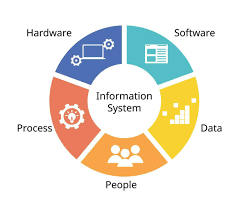
Delving into the basic components: hardware, software, data, people, and processes. Explaining the relationship between technology and business processes — how technology changes the way work is organized and carried out.
3. Data and Database Management
Covers principles of data storage, data modeling (ER diagrams), relational database design, normalization, and the role of SQL. This section emphasizes the importance of data quality and data governance in business decision-making.
4. Networks, Communications, and System Architecture
Explains network architecture, the Internet, Intranet, client-server models, and basic cloud computing. This section illustrates how distributed systems and cloud services change the way information systems are deployed.
5. Enterprise System Applications
Focuses on key applications: ERP (Enterprise Resource Planning), CRM (Customer Relationship Management), SCM (Supply Chain Management). Includes examples of the benefits of system integration: cost reduction, increased efficiency, and improved customer service.
6. System Analysis, Design, and Implementation
Introduces the System Development Life Cycle (SDLC), business analysis methods, requirements analysis, system design, and testing. This section is useful for those who want to understand how an IT project is managed from concept to deployment.
7. Security, Risk, and IT Governance
Discusses information security, access management, encryption, cyberattack prevention, and technology risk management. Includes a section on internal security policies, legal compliance, and the role of IT auditing.
8. Ethics, Legal Issues, and Social Responsibility
Addresses issues of privacy, data ownership, ethics in the use of big data and algorithms. This section encourages readers to consider the social consequences when designing and applying information systems.
9. Trends and the Future of Information Systems
Explore trends such as artificial intelligence, big data analytics, IoT (Internet of Things), blockchain, and the impact of automation on the workforce. The book emphasizes organizational adaptability and innovation when adopting new technologies.
Each chapter comes with real-world examples, exercises, and case studies to help readers connect theory with actual business contexts.
3. Who is This Book For?
- Students in Information Systems / Business Administration / IT: use it as foundational study material, preparing for advanced courses.
- Managers and department leaders without an IT background: want to understand how systems operate, their benefits, and risks when implemented.
- System implementation specialists / Business Analysts: need an overall perspective to communicate effectively between technical teams and business users.
- Self-learners / career changers: want to build a solid foundation to continue learning about data analysis, cybersecurity, or system administration.
4. Why You Should Read This Book
- Comprehensive and Balanced: Covers both technical and managerial aspects, helping readers understand that information systems are not just technology but also strategic tools.
- Connecting Theory with Practice: Numerous case studies and exercises help you clearly see how IS addresses real-world business problems.
- Emphasizing Governance and Ethics: Not only discusses technology implementation but also raises questions about responsibility when handling data and automation.
- Open and Accessible Resource: As an OpenStax textbook, you can access it for free, suitable for both teaching and self-study.
- Supporting Decision-Making: Provides the necessary knowledge to participate in digital transformation projects, evaluate IT solutions, and optimize operational processes.
5. Download and Experience
You can download or read online on platforms like SlideShare, Scribd… depending on your preference and convenience:
- Scribd: https://www.scribd.com/document/906495839/Introduction-to-Computer-Science
- Slideshare: https://www.slideshare.net/slideshow/foundations-of-information-systems-openstax/282693355
Note: The Introduction to Python Programming is released under the Creative Commons Attribution (CC BY 4.0) license. You can share, redistribute, or cite the content of the book, but you must give full credit to the authors.
6. References
[1] OpenStax, Foundations of Information Systems, Houston, TX, USA: OpenStax, Mar. 5 2025. Available: https://openstax.org/books/foundations-information-systems/pages/1-introduction
[2] OpenDev, Foundations of Information Systems. Available: https://kienthucmo.com/en/foundations-of-information-systems/
[3] OpenDev, Introduction to Computer Science. Available: https://kienthucmo.com/en/introduction-to-computer-science/
[4] OpenDev, Principles of Data Science. Available: https://kienthucmo.com/en/principles-of-data-science/
[5] OpenDev, Workplace Software and Skills. Available: https://kienthucmo.com/en/workplace-software-and-skills/